1-on-1 online tutoring
Online AP Calculus AB tutors
Limits, derivatives and integrals, to the AP exam format.
- From $36 an hour
- First session free, no card
- The same tutor every session


Reviewed by Dr. Richa S., Mathematics Educator & PhD
AP Calculus AB tutoring covering limits and continuity, derivatives and differentiation rules, and integration techniques including u-substitution. Your child works with the same dedicated tutor every session, live and 1-on-1, so every concept builds toward exam-day confidence.
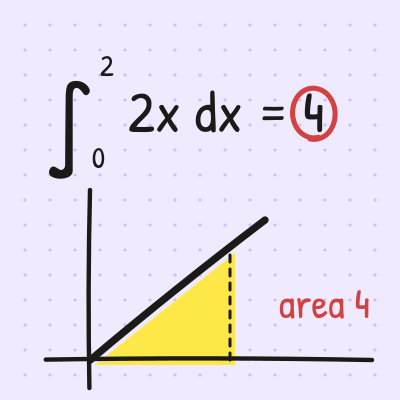
Calculus breaks students who were strong in math for years. Our tutors know exactly why.
Chain rule, implicit differentiation, related rates, the Fundamental Theorem. Our tutors have worked through every unit of AP Calculus AB with students across grades 11 and 12. They know where the exam FRQs take points away and which prerequisite gaps from Algebra 2 and pre-calculus cause the most damage once calculus gets layered on top.
The first session identifies the specific breakdown point. For most AP Calculus AB students, it isn't a calculus concept: it's fraction manipulation, signed-number fluency, or a trig identity gap from pre-calculus that wasn't caught before derivatives arrived. That diagnosis shapes every session that follows.
AP Calculus AB builds on itself every unit. A tutor who worked with your child on limits in September already knows their specific chain-rule errors in November and their integration blind spots in February. A rotating pool of tutors starts from zero each time. Your child doesn't have that kind of time before the May exam.
Sessions follow your child's school curriculum unit by unit. Whatever the teacher assigned this week is what the session covers. The tutor also aligns to the College Board AP Calculus AB Course and Exam Description, so FRQ practice, MCQ strategy, and exam-format familiarity are built in throughout the year, not crammed in April.
The people who teach it
Tutors who teach AP Calculus AB

I’m a postgraduate in Applied Economics, specializing in Statistics, and I’ve been teaching mathematics for the past 4.5
View profile

Mathematics Tutor for Grades 5 to 11 | 4+ Years Teaching | US, IB, IGCSE, GCSE & CBSE Curricula
View profile

Experienced Math Tutor
View profile

I don’t teach math, I teach students how to THINK
View profile

Multi-Disciplinary STEM Educator (Mathematics, Physics, Chemistry)
View profile

Math Tutor, 7 years online tutoring, grades 5 to 10
View profile
After you book
How the free AP Calculus AB session works
No card and nothing to decide first. If it is not right for your child, you owe nothing.
Pick a grade and a time
About a minute.
We call you
To hear what your child needs, so the tutor comes prepared.
Your child meets their tutor
45 minutes, live and 1-on-1.
- 29,200+
- hours of 1-on-1 lessons taught
- 1,150+
- US students taught
- 200
- tutors on the team
- 90%
- parent satisfaction score
From other parents
What parents tell us
Parents on video, in their own words, and many more in writing.
StephanieMom of a 4th grader“Through the dedication, patience, and effective teaching methods, she has improved her grades to A’s and B’s.”
LeathaParent of a 6th grader“She was not reading fluently at all. Now she is reading 41 to 50 words a minute.”
JessicaParent of three“They all see the same tutor. He knows their names.”
Dad of a 7th grader “He was a straight-A student in sixth grade, then his grades were suffering. His grades have improved dramatically.”
MariaMom of three“They sign in by themselves. They look forward to these sessions.”
Malika likes her tutor. No complaints. He's professional and masters calculus.
Calculus student's parent
My daughter had difficulty understanding Statistics at school. Richa made it easy for her through her tutoring sessions. Thank you, Richa!
Statistics student's parent
Jhon Paulo Reyes is a great tutor. He is knowledgeable about the content of what he is teaching, he always comes prepared, he listens to his students' needs, he explains well, he is patient, he is organized, and he makes the subject interesting for the student. We are very grateful to have him as our daughter's tutor.
Pre-calculus student's parent
Pricing
Simple pricing
Your first 45-minute session is free. No credit card, no commitment. After that you buy sessions in a block and use them whenever you like.
FreeYour first 45-minute session
No credit card, no commitment.
8 sessions
$54per hour
$432 total for 8 sessions
- Valid for 3 months
- 60-minute private 1-on-1 sessions
- The same tutor every session
25 sessionsSave 17%
$45per hour
$1,125 total for 25 sessions
- Valid for 6 months
- 60-minute private 1-on-1 sessions
- The same tutor every session
- Most chosen
50 sessionsSave 33%
$36per hour
$1,800 total for 50 sessions
- Valid for 12 months
- 60-minute private 1-on-1 sessions
- The same tutor every session
- Change tutor at no charge
- Payment plans on every package
Questions parents ask
Are Ruvimo AP Calculus AB tutors vetted and credentialed?
Tutors go through AI-assisted screening followed by manual review of qualifications and teaching history. Credential verification is completed before any tutor conducts a session. Ruvimo tutors are based internationally, primarily in India, the Philippines, and Africa, which is what keeps the per-hour rate well below local market rates while maintaining subject-matter depth. All tutors selected for AP Calculus AB have demonstrated proficiency in the full College Board curriculum including limits, derivatives, and integral calculus.
What if my child does not connect with their AP Calculus AB tutor?
A tutor swap is arranged at no charge and without requiring any explanation. A consistent tutor-student relationship matters in AP Calculus AB because the tutor needs to know which specific steps your child tends to skip and where prior gaps re-emerge. If the fit is not right, replacing the tutor quickly is better than continuing sessions that are not producing progress. The new tutor receives a summary of what has been covered so sessions do not restart from scratch.
What does the parent progress report include after AP Calculus AB sessions?
After each session you receive a written summary covering the specific calculus topics addressed, how your child performed on problems attempted during the session, any conceptual gaps identified, and the practice work assigned for before the next session. For AP Calculus AB, reports typically note progress on skills like derivative rules, interpreting graphs of f, f-prime, and f-double-prime, and multi-step integration. The areas most heavily tested on both the multiple-choice and free-response sections of the AP exam.
How is Ruvimo different from Khan Academy for AP Calculus AB?
Khan Academy provides video instruction your child watches passively. Ruvimo provides a live tutor who can see exactly where your child's reasoning breaks down on a specific problem, a misapplied chain rule, a sign error in integration by substitution, and correct it in real time. After each session, you receive a written progress summary noting what was covered and what needs reinforcement. That feedback loop, combined with assigned practice and accountability, is what produces exam-ready performance rather than general topic familiarity.
Do Ruvimo tutors follow my child's school AP Calculus AB curriculum, or teach their own sequence?
Tutors follow your child's school sequence. Each session is planned around the specific topic your child's class is covering that week, whether that is implicit differentiation, u-substitution, or Riemann sums. The College Board's AP Calculus AB framework sets the overall scope, but the session stays in sync with your child's classroom so that tutoring reinforces upcoming tests rather than running ahead of or behind the class.
My child has math anxiety and has lost confidence in their ability to handle AP-level math, can tutoring actually help with that?
Confidence issues are common at the AP Calculus AB level and are not a reflection of actual ability. Parents in our sessions have specifically noted that patient, encouragement-focused teaching helped their child regain belief in their own capability, which then opened up faster academic progress. Tutors are selected in part for this teaching style, and the 1-on-1 format removes the classroom pressure of being called on or making mistakes in front of peers. The same tutor attends every session, which also builds familiarity and reduces anxiety over time.
Does the tutor actually help with AP Calculus AB homework, or only cover concepts?
Both, in a deliberate sequence. The tutor explains the underlying concept first, then works one example together with your child, then assigns one or two problems for your child to attempt independently in the session. This active-retrieval approach consistently produces stronger formula recall than passive explanation alone. Assigned homework is reviewed at the start of the next session. Tutors align practice problems with the specific unit your child's school is covering, whether that is related rates, the Fundamental Theorem of calculus, or accumulation problems.
How quickly will my child see improvement in AP Calculus AB?
Every child moves at their own pace, so we do not promise a number of sessions. You get a note after every session on what was covered and what to practice, so you can see progress as it happens rather than wait for a report card. Practice between sessions matters most for the AP exam, especially the free-response questions.
Why do so many students suddenly hit a wall with AP Calculus AB after doing well in pre-calculus?
AP Calculus AB introduces compound, multi-step problems where a single algebra error, a sign flip or a mishandled fraction, invalidates the entire solution. Students who memorized procedures in pre-calculus often find that approach breaks down when derivative and integral rules must be applied in combination. Tutors address this by requiring students to write out every step explicitly and by having them attempt problems independently after instruction, which research from our own sessions confirms produces faster formula retention than lecture-based review alone.
My child is in Grade 11 and already struggling with fractions and negatives. Is it too late to catch up before taculus topics get harder?
It is not too late, and this gap is more common than most parents expect. Tutors regularly see Grade 11 students enter AP Calculus AB with shaky fraction and negative-number skills. Both of which surface immediately in limit and derivative work. A targeted diagnostic in the first session identifies exactly where the gap sits, and a brief focused review is typically enough for students to catch up and move forward. The foundational work is built directly into the calculus curriculum rather than treated as a separate remedial track.
How much does AP Calculus AB tutoring cost at Ruvimo?
Sessions start from $36/hour. Significantly below the $60 to 100/hour typical of local in-person AP Calculus tutors. There are no enrollment fees. A free first session is available so your child can work through actual calculus material before you decide. The rate depends only on the package size, whether your child needs help with limits, derivatives, or full exam preparation.
Still have a question? Ask us and a person answers, or call +1 (254) 425-4593.
AP Calculus AB covers limits, differentiation, and integration, the three pillars of a first-semester college calculus course, and is typically taken in grades 11 or 12. Students who master the material earn college credit through the AP exam in May. A tutor identifies which unit is breaking down (limits, derivative applications, or the Fundamental Theorem), then rebuilds the specific step that collapsed.
Signs your child needs an AP Calculus AB tutor
Most AP Calculus AB gaps don’t show up as “not understanding calculus”, they show up as algebra and fraction errors that only surface once the calculus gets harder.
- Gets the right formula but produces the wrong answer because of a sign error or dropped parenthesis in the final simplification
- Can differentiate a polynomial but freezes when the chain rule produces a negative exponent or compound fraction
- Writes the correct setup for a related-rates or optimization problem, then substitutes values in the wrong order
- Answers free-response questions with correct algebra but cannot explain what the derivative or integral means in context
- Understands u-substitution in isolation but cannot identify which substitution to use when it isn’t obvious from the problem
- Grades on unit tests are inconsistent: strong on one unit, then a significant drop on the next, without an obvious reason
What an AP Calculus AB tutor helps with
AP Calculus AB tutoring covers limits, all differentiation rules, integration techniques, and the applied problems that make up the bulk of the FRQ section.
- Limits graphically, numerically, and analytically
- One-sided limits, limits at infinity, Squeeze Theorem
- Derivative definition and power, product, quotient rules
- Chain rule, implicit differentiation, inverse functions
- Related rates and optimization problems
- Mean Value Theorem, first and second derivative tests
- Riemann sums and definite integrals
- Fundamental Theorem of calculus (both parts)
- u-substitution, differential equations, slope fields
- Area between curves, volumes of revolution, accumulation problems
Students who leave AP Calculus AB with a solid grasp of the Fundamental Theorem and integration techniques enter college-level calculus or AP Calculus BC without the conceptual debt that typically surfaces in second-semester engineering math.
How much does online AP Calculus AB tutoring cost?
AP Calculus AB tutoring at Ruvimo starts from $36 per hour. No enrollment fee, and the first session is free.
- From $36/hour. Live and 1-on-1, 60-minute sessions with a dedicated tutor
- $0 enrollment fee, no setup cost, no registration charge
- Free first session. No credit card required to book the trial
A typical schedule of two sessions per week is about nine sessions a month, roughly $310 to $470 depending on the package, for ongoing weekly support.
For comparison, large test-prep companies and private tutors in this subject range considerably higher. Check Princeton Review’s and Tutor.com’s sites for their current pricing on AP-level tutoring. Ruvimo’s online math tutors are available at the same rate across all AP math subjects, with no surcharge for advanced courses.
How Ruvimo compares to other AP Calculus AB tutoring options
Two things separate Ruvimo from most AP Calculus AB options: price and tutor consistency. Tutoring marketplaces connect families with a different tutor each time. Whoever is available. Learning centers charge enrollment fees and lock families into contracts before a single session is complete. Ruvimo assigns one tutor, keeps them across every session, and charges from $36/hour. If the match isn’t right, the tutor switches at no charge. For a course where the FRQ section rewards students who can show full working under exam conditions, continuity with one tutor matters more than access to a large pool.
How online AP Calculus AB tutoring at Ruvimo works
Every session is live and 1-on-1, and with the same tutor your child builds a working relationship with across the school year.
- Book the free session, no credit card required, no commitment.
- Get matched with a dedicated AP Calculus AB tutor before the session, based on your child’s grade, current unit, and specific gaps.
- Attend the free 45-minute 1-on-1 session online, then receive a written parent progress summary by email after each session.
Free first session. Switch tutors anytime, no charge, no questions asked.
Where AP Calculus AB students lose ground
AP Calculus AB is a single course, but the gaps that derail students tend to cluster around two transitions: entering the course with incomplete Algebra 2 or pre-calculus foundations, and handling the multi-step compound problems that dominate the FRQ section. The College Board exam in May covers 8 curriculum units. The units below account for the highest failure rates.
Units 1 to 3: limits, continuity, and differentiation rules
- Limits graphically and numerically; one-sided limits and limits at infinity (LIM-1, LIM-2)
- Continuity and the Intermediate Value Theorem
- Derivative as a limit; power, product, and quotient rules (FUN-1, CHA-2)
- Chain rule, implicit differentiation, derivatives of inverse and inverse-trig functions (FUN-3)
- Where students get stuck: students who never fully internalized fraction and negative-exponent manipulation arrive here appearing fine, until the chain rule produces a compound fraction. They write the rule correctly but then “simplify” −4(2x−1)⁻³ as −4/2x−1³, dropping the parenthesis structure entirely. The calculus was right. The algebra collapsed.
- Richa, one of our AP Calculus tutors, noted this pattern consistently with her Grade 11 students: negative-integer and fraction gaps carried over from Grade 10 were the primary obstacle entering Unit 2, not the calculus itself. A targeted review before differentiation work resolved the issue quickly.
- Relevant assessments: Unit 1 to 3 content appears on the PSAT (Grade 11) and SAT math; gaps here also affect semester course grades that feed weighted GPA.
- Closing this gap: prerequisite fraction and signed-number fluency typically resolves in 2 to 4 focused sessions once identified.
Units 4 to 5, contextual applications and analytical differentiation
Units 4 and 5 are where the exam separates students who understand calculus from students who can only execute it. Related rates, optimization, the Mean Value Theorem, and curve sketching all require a student to read a problem, build a model, differentiate, solve, and interpret. In sequence, under time pressure. The consistent failure point is procedural sequencing, not conceptual knowledge. Students who correctly write dV/dt = 4πr²(dr/dt) then substitute the rate value where the radius belongs, or solve for dr/dt and stop before plugging in the given r. The answer is symbolic where a number was required. State exams (STAAR Algebra II in Texas, NY Regents for prior-course standing) rarely catch this because they test earlier material; the AP exam FRQ section is where the gap becomes unmistakable.
- Closing this gap: scaffolded sequencing practice across related rates and optimization typically takes 4 to 6 sessions.
Units 6 to 8: integration, differential equations, and applications
- Riemann sums and the definite integral as accumulation (FUN-5, CHA-4)
- Fundamental Theorem of calculus, Parts 1 and 2
- u-substitution; indefinite integrals and the +C convention
- Slope fields and separation of variables (FUN-7)
- Area between curves, volumes (disc, washer, cross-section), average value
- Where students get stuck: students conflate the definite integral (a number, the area under a curve from a to b) with the indefinite integral (a family of functions). On a free-response question they write ∫f(x)dx = F(x) and leave no +C, then write a definite integral on the next step and add +C there. The FRQ scorer marks both steps incorrect because the conceptual distinction was never made.
- Relevant assessments: Units 6 to 8 make up roughly 35 to 45% of the AP Calculus AB exam (early May). ACT Math tests pre-calculus, not calculus directly, but the same fraction fluency shows up.
- Closing this gap: the FTC distinction and u-substitution recognition each close in 3 to 5 sessions of targeted practice.
Why AP Calculus AB students struggle (and why it’s not the calculus)
AP Calculus AB doesn’t get harder as the year goes on. It gets more layered, and layers expose every gap from every prior course simultaneously.
The “derivative is a formula, not a rate” error
Students learn to compute derivatives before they understand what a derivative means. The result: they can produce f′(x) in seconds but go silent when asked “what does this number tell you about the situation at x = 3?” On the AP exam FRQ, this costs points on every question that asks for units, interpretation, or contextual meaning, which is most of them. Orton (1983), in Students’ Understanding of Differentiation (Educational Studies in mathematics), documented precisely this pattern: students execute differentiation rules reliably while failing to connect the result to a rate of change.
If your child can compute a derivative quickly but goes blank when asked what the answer means in a given context, this is almost certainly the active gap.
How to fix this:
- Before introducing any new differentiation rule, label the output with units (velocity from position, cost-per-unit from a cost function).
- After every computation, ask: “Is this number a rate, a position, or an amount? What would a doubling of this value mean in the real situation?”
- Run three consecutive contextual problems where interpretation is required before moving to symbolic practice.
The FTC / “+C and bounds” confusion
Students treat the definite integral and the indefinite integral as interchangeable. Two notations for the same operation. They are not. A definite integral is a number. An indefinite integral is a function family. Students who conflate them write +C on definite integrals (losing points) and omit it on indefinite ones (losing different points). On a related accumulation problem, they apply the Fundamental Theorem to find F(b) − F(a) but include +C in both terms, which cancel, so the answer is accidentally correct, until a problem is structured so the cancellation doesn’t happen and the error becomes visible.
Richa, one of our AP Calculus tutors, works with Grade 11 students who often carry this confusion from their first exposure to antiderivatives. In a recent session with a student whose grade had stalled at a C despite genuine effort, the root issue was exactly this: the distinction between indefinite and definite integration had never been made explicit, and missed sessions from a prior year had left the gap unaddressed. Naming it directly changed how the student approached every integration problem afterward.
If your child loses points on integration free-response questions but can compute the antiderivative correctly in isolation, this is almost certainly the active gap.
How to fix this:
- Draw a hard line: write “= a number” next to every definite integral setup and “= a function + C” next to every indefinite one, until the distinction is automatic.
- Give two structurally identical problems, one definite, one indefinite, and require the student to explain in words why the outputs are different types of objects.
- Practice FTC Part 2 (the derivative of an integral with a variable upper bound) separately until the two directions of the theorem feel distinct.
The multi-step sequencing collapse on FRQs
Omar, one of our AP Calculus tutors, observed this pattern directly with a Grade 12 student: the student understood each calculus step in isolation but could not reliably execute a four-step FRQ sequence under exam conditions. Omar’s approach was to break every compound problem into an explicit numbered sequence before touching the algebra, a method that produced measurable progress on subsequent attempts. His note from the session: students who fail to practice problems independently between sessions stall regardless of how well the in-session work goes, a pattern he documented explicitly.
If your child’s practice exam scores are significantly lower than their unit test scores, the gap is almost certainly procedural sequencing under time pressure, not conceptual knowledge.
How to fix this:
- Before computing anything on a multi-step problem, write a numbered plan: (1) identify what’s given, (2) write the relevant relationship, (3) differentiate or integrate, (4) solve for the target, (5) interpret with units.
- Practice timed FRQs with the plan written first. No calculation until the plan is complete.
- Review errors at the step level, not the problem level: identify exactly which step failed, not just that the answer was wrong.
All three of these gaps are diagnosable in a single diagnostic session. The alternatives families consider for advanced math support rarely include this level of per-student diagnosis before the first session. Each gap closes in a handful of focused sessions once it’s been named precisely.
AP is a registered trademark of the College Board, which was not involved in the production of, and does not endorse, this product.