1-on-1 online tutoring
Online calculus tutors
Limits, derivatives and integrals, one idea at a time.
- From $36 an hour
- First session free, no card
- The same tutor every session


Reviewed by Daniel, Advanced Math & AP Calculus Tutor
Calculus is where small gaps in precalc and trig quietly snowball into big problems with limits, derivatives, and integrals. Your child works with the same tutor every session. Someone who already knows where they left off and exactly what AP Calculus AB or college-prep coursework demands next. Sessions are live and 1-on-1, and built around what's actually on your teen's next test.
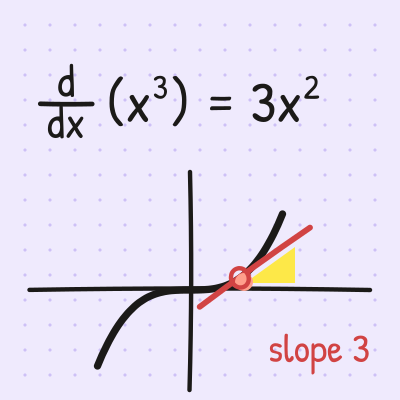
Calculus is where even strong math students suddenly struggle. Our tutors know why.
Every calculus tutor on Ruvimo passed a content interview before working with a student: limits, derivatives, integrals, series. These are specialists. Not algebra teachers who moved into harder territory, not generalists filling a slot.
Most calculus struggles aren't calculus problems. They're pre-calc and trig gaps that only become visible when the material gets harder. The first session figures out whether your child needs calculus content or foundation work, because those are two completely different sessions.
Calculus builds on itself fast. A tutor who's been there from the start knows which concepts your child has internalized and which ones still slip under pressure. They don't re-diagnose every session. They pick up where things left off and keep moving.
Sessions are built around your child's actual course: aP Calculus AB, BC, or college-level. Same notation, same exam format. For AP students, free-response structure is part of how we practice from day one.
The people who teach it
Tutors who teach calculus

Aeronautical Engineer Specializing in Middle School, and High School Math
View profile

I’m a postgraduate in Applied Economics, specializing in Statistics, and I’ve been teaching mathematics for the past 4.5
View profile

Grade 6 - 12 Mathematics Tutor. Helped 100+ students get better understanding in Mathematics.
View profile

ELA TUTOR: EARLY YEARS TO GRADE 3
View profile

SAT, ACT & AP Calculus Specialist | 5+ years online, 100+ top-tier student results, guaranteed clarity & top scores
View profile

Multi-Disciplinary STEM Educator (Mathematics, Physics, Chemistry)
View profile
After you book
How the free calculus session works
No card and nothing to decide first. If it is not right for your child, you owe nothing.
Pick a grade and a time
About a minute.
We call you
To hear what your child needs, so the tutor comes prepared.
Your child meets their tutor
45 minutes, live and 1-on-1.
- 17,000
- hours of 1-on-1 lessons taught
- 1,000+
- US students taught
- 200
- tutors on the team
- 90%
- parent satisfaction score
From other parents
What parents tell us
Four of them on video, unscripted, and more in their own words.
LeathaParent of a 6th grader“She was not reading fluently at all. Now she is reading 41 to 50 words a minute.”
JessicaParent of three“They all see the same tutor. He knows their names.”
A dadParent of a 7th grader“He was a straight-A student in sixth grade, then his grades were suffering. His grades have improved dramatically.”
MariaMom of three“They sign in by themselves. They look forward to these sessions.”
Malika likes her tutor. No complaints. He's professional and masters calculus.
Calculus student's parent
My daughter had difficulty understanding Statistics at school. Richa made it easy for her through her tutoring sessions. Thank you, Richa!
Statistics student's parent
Jhon Paulo Reyes is a great tutor. He is knowledgeable about the content of what he is teaching, he always comes prepared, he listens to his students' needs, he explains well, he is patient, he is organized, and he makes the subject interesting for the student. We are very grateful to have him as our daughter's tutor.
Pre-calculus student's parent
Pricing
Simple pricing
Your first 45-minute session is free. No credit card, no commitment. After that you buy sessions in a block and use them whenever you like.
FreeYour first 45-minute session
No credit card, no commitment.
8 sessions
$54per hour
$432 total for 8 sessions
- Valid for 3 months
- 60-minute private 1-on-1 sessions
- The same tutor every session
25 sessionsSave 17%
$45per hour
$1,125 total for 25 sessions
- Valid for 6 months
- 60-minute private 1-on-1 sessions
- The same tutor every session
- Most chosen
50 sessionsSave 33%
$36per hour
$1,800 total for 50 sessions
- Valid for 12 months
- 60-minute private 1-on-1 sessions
- The same tutor every session
- Change tutor at no charge
- Payment plans on every package
Questions parents ask
My child has always struggled with math, is calculus tutoring still worth trying?
It depends on what is actually causing the struggle. Many students who describe themselves as bad at math are dealing with specific foundational gaps, fractions, negative numbers, or trigonometry, rather than a general inability to learn mathematics. Before advancing to calculus content, a tutor will assess where those gaps are and address them directly. Parents of students who previously lost confidence in math have noted improvements in willingness to attempt problems once a tutor works through steps patiently and without rushing past confusion.
Is online calculus tutoring as effective as in-person?
For most students, yes. Sessions use shared digital whiteboards and graphing tools that allow tutors to annotate problems in real time. Functionally similar to working on paper together. The more significant factor is tutor quality and consistency, not the format. Students work with the same tutor every session, which allows the tutor to track individual patterns, such as recurring errors with negative numbers or formula application, without starting from scratch each time.
How is this different from Khan Academy or other free resources?
Khan Academy delivers content; a tutor responds to the specific moment a student gets stuck. In calculus, the gap between watching a worked example and independently solving a problem is where most students struggle. A tutor can identify in real time whether a student is confused about the formula itself, the algebraic steps, or an earlier concept like trigonometry, and adjust immediately. Free platforms cannot catch those individual error patterns or hold a student accountable for completing practice between sessions.
What does the parent progress report include?
After each session you receive a summary covering what was worked on, where the student demonstrated understanding, and where gaps remain. For calculus students, this typically includes notes on specific procedural steps causing difficulty, for example, whether a student is misapplying the chain rule or struggling with trigonometric identities in derivatives. These summaries are written to be readable without a math background, so you can track progress concretely rather than relying on your child's self-report.
Do you follow my child's school curriculum?
Yes. Tutors align sessions to the student's current course, textbook, and upcoming assessments rather than following a fixed internal curriculum. Each session is planned from where the student is in their curriculum. This means session time is spent on what the student will actually be tested on. Not on topics their class covered three weeks ago or will not reach until next semester.
What calculus topics do students in grades 11 to 12 struggle with most?
Limits, the chain rule, related rates, and integration techniques are the most common sticking points. Below those topics, trigonometry is a frequent hidden gap. Many grade 12 students discover their calculus difficulty is actually a trig problem once a tutor assesses them properly. Foundational issues with negative integers and fractions also surface regularly, even in high-performing students, and need to be cleared before calculus practice can move at a normal pace.
How quickly will my child see improvement in calculus?
Most students show measurable progress within three to four sessions, though the timeline depends on how many foundational gaps are present at the start. Students who arrive with unresolved trigonometry, fraction, or negative-number weaknesses typically need one to two sessions of targeted review before calculus topics move efficiently. Students who complete homework between sessions retain material significantly better than those who attend sessions only. You will receive a progress summary after each session so you are not waiting until the next exam to find out how things are going.
Can you support honors calculus or accelerated tracks?
Yes. Tutors are matched to the level of the course, including AP Calculus AB, AP Calculus BC, and school-specific honors tracks. Each session is planned around your child's current curriculum, so the tutor arrives ready to cover the specific topics and pacing your school requires, not a generic calculus curriculum.
Do your tutors help with homework, or only teach concepts?
Both. Tutors work through new concepts and also sit with students on assigned homework and practice problems. This matters in calculus: students who understand material during a session but skip practice between sessions consistently underperform on exams. Our tutors use homework review as a diagnostic tool, identifying exactly which procedural steps are breaking down, rather than simply checking answers.
What happens if my child does not connect with their calculus tutor?
We swap tutors. No charge, no questions asked. A strong student-tutor relationship has a measurable effect on confidence, particularly in calculus where students often arrive already discouraged. If the first tutor is not the right fit after a session or two, we reassign your child to another qualified instructor immediately. Your child keeps the same replacement tutor across every subsequent session for consistency.
Are Ruvimo's calculus tutors background-checked and qualified?
Every tutor goes through AI-assisted screening followed by a manual credential review before working with students. Tutors are sourced from India, the Philippines, and Africa, and hold verified university-level mathematics qualifications. For calculus specifically, we confirm subject competency in topics including limits, derivatives, integrals, and the foundational trigonometry that underpins those concepts, because trig gaps are one of the most common reasons grade 11 to 12 students stall in calculus.
How much does online calculus tutoring cost?
Sessions start at $36 per session. Significantly below the typical market rate of $60 to $100 per hour for private calculus tutoring. There are no enrollment fees. A free first session is available so you can evaluate the fit before spending anything. If it is not the right match, you walk away without charge.
Still have a question? Ask us and a person answers, or call +1 (254) 425-4593.
Is calculus really the problem? A grade-by-grade look at where students actually get stuck
Quick answer: Ruvimo provides live, 1-on-1 online calculus tutoring for 11th and 12th graders from $36 per session: same tutor every session, and a free first session with no credit card required. But before booking anything, use this section to pinpoint exactly where your child’s gap is. Parents who can name the specific topic get better results faster.
Calculus tutoring at the 11th and 12th grade level almost always involves two different students: the junior entering AP Calculus AB who hit a wall at limits and derivatives, and the senior grinding toward the AP exam in May or preparing for a college placement test. The curriculum they face is distinct, and so are the gaps that slow them down.
Grade 11: limits, derivatives, and the pre-calculus bridge
- Unit circle, radian measure, and trig identities as calculus prerequisites
- Limits and continuity: one-sided limits, limits at infinity, removable vs. non-removable discontinuities (AP Calc AB Unit 1, LIM-1, LIM-2)
- Differentiation: limit definition of the derivative, power/product/quotient rules, chain rule (AP Calc AB Unit 2, CHA-2, FUN-3)
- Composite, implicit, and inverse function differentiation (Unit 3, FUN-3.D, FUN-3.E
- Related rates and linearization (Unit 4, CHA-3
- Where students get stuck: Students who learned the chain rule as “derivative of outside times derivative of inside” can differentiate sin(3x) correctly but write cos²(3x) · 6x for d/dx[sin²(3x)], losing the outer power rule entirely because the “outside function” is no longer visually obvious. The chain rule was a syntactic pattern for them, not a statement about composition. Any structural variation breaks the script.
- State assessments: PSAT/NMSQT (October), SAT (primary year for juniors), ACT, AP Calculus AB exam (May), and state end-of-course exams such as the NY Regents Algebra II and Florida B.E.S.T. EOC.
- Connects to: Integration in 12th grade, the AP free-response section, and college Calculus I placement.
- Closing this gap: Rebuilding composition-of-functions intuition and re-anchoring the chain rule typically takes 4 to 6 focused sessions. If the underlying bottleneck is algebraic that resolves faster, usually 2 to 3 sessions once named: factoring, rationalizing.
Grade 12: integration, the FTC, and AP exam readiness
By 12th grade, the calculus has gotten denser and the exam is real. Students in AP Calculus AB are working through Riemann sums, definite and indefinite integrals, u-substitution, and both parts of the Fundamental Theorem of calculus (FUN-5, FUN-6, CHA-4. AP Calculus BC students add parametric equations, polar coordinates, and the full sequence of infinite series and convergence tests in Units 9 and 10. Dual-enrollment students face the same material with college-course grading and no AP safety net.
- Riemann sums and definite integrals as area accumulation (AP Calc AB Unit 6)
- Fundamental Theorem of calculus, Parts 1 and 2 (FUN-5, FUN-6
- U-substitution for indefinite and definite integrals
- AP Calculus BC extensions: parametric equations, polar coordinates, infinite series, convergence tests (Units 9 to 10)
- Trigonometric functions as direct prerequisites for integration, a gap here blocks antiderivative work entirely
- Where students get stuck: Students who can compute ∫2x dx = x² + C mechanically freeze on ∫x·cos(x²) dx because they don’t recognize the integrand as a chain-rule derivative running backwards. On a test, a student writes ½x²·sin(x²) + C, applying the power rule to x and the antiderivative of cosine separately, as if integration distributes across multiplication. The calculus step isn’t what failed, the conceptual model did. A separate and equally common block: students who skipped or rushed trigonometry earlier hit a hard wall when derivatives and integrals of trig functions appear, because the prerequisite knowledge simply isn’t there.
- State assessments: AP Calculus AB and BC exams (May) are the primary urgency driver. Also relevant: SAT/ACT retakes (fall), Accuplacer and ALEKS college placement exams, dual-enrollment finals, and IB Math AA HL/SL exams.
- Connects to: College Calculus II (sequences and series, multivariable calc), engineering and science coursework, and any major requiring quantitative reasoning.
- Closing this gap: U-substitution fluency typically develops in 3 to 5 sessions once the diagnostic step is trained. Identifying chain-rule footprints before the substitution is written down. Moving a student from a projected 3 to a projected 4 on the AP exam requires roughly 6 to 8 sessions of structured free-response practice.
If your child is still building foundations in pre-calculus, that’s the right place to start before AP-level work begins.
Why 11th and 12th graders struggle with calculus, and what actually fixes it
Calculus doesn’t get harder. It gets more abstract, and abstraction punishes every gap that was papered over in algebra and precalculus. Most students who say “I just don’t get calculus” are describing a different problem. One that has a specific name and a specific fix.
The derivative is a formula, not a rate of change
Students learn to turn xn into nxn-1 quickly, and for a while that’s enough. The problem surfaces on graphical and applied questions: given a graph of f’(x), a student asked “where is f increasing?” answers “where f’(x) is increasing” instead of “where f’(x) > 0.” They’re confusing the behavior of the derivative with its value. Two different things that look similar when every problem is purely symbolic.
The fix is to work every new differentiation rule in three layers within the same session: first as a slope on a graph, then as a rate in a word problem (velocity, population, cost), then symbolically. The formula is introduced last, not first, so it arrives with a meaning already attached.
If your child can compute f’(x) for any polynomial but cannot answer “what does f’(3) = 5 mean in plain English?”, this is almost certainly the active gap.
Richa, one of our 11th grade math tutors, has seen this gap show up invisibly in students whose grades suggest they’re keeping up. Earlier this year, she worked with a student whose grade held steady at a C despite genuine effort and multiple retests. The issue traced back to missed prior-year content: the procedural steps were attempted correctly, but the underlying meaning of each operation was absent, which made applied problems on every exam consistently harder than practice problems.
U-substitution feels like guessing
Textbooks introduce u-substitution forwards: here is u, now compute. Students never practice the diagnostic step of looking at an integrand and asking “what chain-rule differentiation produced this?” So when they see ∫2x·e(x²) dx, they set u = e(x²), get confused by the result, and write “cannot be integrated.” The correct substitution, u = x², du = 2x dx, was right in front of them.
Students who freeze on ∫(2x+1)5 dx when the coefficient in du isn’t explicitly present, but could handle ∫(2x+1)5 · 2 dx, are showing exactly this gap. The technique isn’t the problem. The direction of the reasoning is.
The fix is to reverse the worksheet. Start sessions by differentiating composite functions, then hand the student the result and ask “what was the original?” Training the eye to recognize chain-rule footprints comes before u-substitution is ever written down.
If your child can attempt u-substitution when the setup is clean but abandons problems when du requires adjustment, this is almost certainly the active gap.
Omar, one of our 12th grade math tutors, is direct about what makes the difference at this level: the sessions can provide the structure, but students who skip independent practice between sessions show it immediately on tests. What he sees consistently is that students who work through even one or two problems on their own after each session retain procedural steps far more reliably than students who wait for the next session to re-engage with the material. The session builds the model. Independent practice locks it in.
How much does an online calculus tutor cost?
Ruvimo charges from $36 per session for live, 1-on-1 online calculus tutoring. There are no enrollment fees. Bundles of 8 or more sessions are available. The first session is a free 45-minute session, no credit card required.
For context: in-person tutoring centers in most metro areas charge significantly more and often require enrollment packages. The tradeoff is that centers offer a physical space and face-to-face interaction, which some students genuinely prefer. Ruvimo’s format, live video, same tutor every session, AI-assisted lesson planning before and after, works best for families who want consistency and transparency without the overhead.
The tutor plans each session around where your child is. After each session, you receive a plain-language note from the tutor covering what was covered, where your child got stuck, and what the next session will focus on. You don’t have to ask.
Tutors are sourced globally and go through a 3-stage vetting process including a live teaching demo before joining the platform. Your child works with the same tutor every session, not a rotating pool.
See also: online math tutors across all high school subjects.