1-on-1 online tutoring
Online 7th grade math tutors
Proportions, integers and two-step equations.
- From $36 an hour
- First session free, no card
- The same tutor every session


Reviewed by Wren H., Elementary & Middle School Math Specialist
Online 7th grade math tutoring covering ratios and proportional relationships, integers and rational numbers, and expressions and equations. Your child works with the same dedicated tutor every session, live and 1-on-1, so every gap is closed before algebra begins.
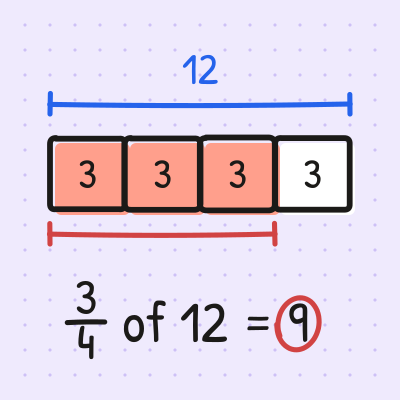
7th grade is where arithmetic ends. We make sure algebra starts clean.
Signed numbers, proportional reasoning, two-step equations. Our tutors have seen every place 7th grade math breaks down. They know the difference between a student who hasn't practiced and a student who has the wrong mental model. That distinction changes everything about how a session runs.
The first session identifies whether your child's gap is in 6th grade rational number fluency, the signed-number model for 7.NS.A, or the multiplicative reasoning that percent change requires. Those are three different problems with three different fixes. We find the right one before building anything on top of it.
A rotating tutor re-learns your child every session. A consistent tutor already knows your child distributes minus signs wrong, and that rushing on multi-step problems is the tell. That continuity means no wasted time. Every session picks up exactly where the last one left off.
Sessions follow the CCSS Grade 7 domains your child's school is actually teaching: 7.NS, 7.RP, 7.EE, 7.G, and 7.SP. Whether the textbook is Go Math, Eureka Math, or a state-specific curriculum, the tutor aligns to the sequence your child's teacher is using, not a generic curriculum.
The people who teach it
Tutors who teach 7th grade math

Math & ELA Tutor | 3,000+ Lessons | Grades 1 to 8 | 500+ tutoring sessions at RUVIMO
View profile

Maths & CS Tutor (Grade 5-9)
View profile

K-12 Math, English & Science Tutor | Making learning clear, engaging and confidence-building
View profile

Math teacher and researcher
View profile

Math Tutor, 7 years online tutoring, grades 5 to 10
View profile

Math & Coding Mentor & Making Learning Fun Through Real Projects
View profile
After you book
How the free 7th grade math session works
No card and nothing to decide first. If it is not right for your child, you owe nothing.
Pick a grade and a time
About a minute.
We call you
To hear what your child needs, so the tutor comes prepared.
Your child meets their tutor
45 minutes, live and 1-on-1.
- 28,000+
- hours of 1-on-1 lessons taught
- 1,150+
- US students taught
- 200
- tutors on the team
- 90%
- parent satisfaction score
From other parents
What parents tell us
Four of them on video, unscripted, and more in their own words.
LeathaParent of a 6th grader“She was not reading fluently at all. Now she is reading 41 to 50 words a minute.”
JessicaParent of three“They all see the same tutor. He knows their names.”
Dad of a 7th grader “He was a straight-A student in sixth grade, then his grades were suffering. His grades have improved dramatically.”
MariaMom of three“They sign in by themselves. They look forward to these sessions.”
I can see the improvement in Eden's math and the grade he gets from the school test.
7th grade math student's parent
Eniko made a small request which I told her was not intentional. She doesn't want to be treated like a little baby. She really likes Ms. Kat. But she's made the statement twice and we are very satisfied with the teaching and plan to continue. Thank you.
7th grade math student's parent
Logan truly enjoys working with Omar and they share a wonderful bond that reflects in his engagement and learning. The comfort and trust Logan has with his tutor make a real difference in his progress. Whenever I feel that school support is not sufficient for Logan, my first point of contact will be Ruvimo, as I have complete confidence in the guidance and support provided.
Pre-algebra student's parent
Pricing
Simple pricing
Your first 45-minute session is free. No credit card, no commitment. After that you buy sessions in a block and use them whenever you like.
FreeYour first 45-minute session
No credit card, no commitment.
8 sessions
$54per hour
$432 total for 8 sessions
- Valid for 3 months
- 60-minute private 1-on-1 sessions
- The same tutor every session
25 sessionsSave 17%
$45per hour
$1,125 total for 25 sessions
- Valid for 6 months
- 60-minute private 1-on-1 sessions
- The same tutor every session
- Most chosen
50 sessionsSave 33%
$36per hour
$1,800 total for 50 sessions
- Valid for 12 months
- 60-minute private 1-on-1 sessions
- The same tutor every session
- Change tutor at no charge
- Payment plans on every package
Questions parents ask
How do I know if my child needs a 7th grade math tutor?
The clearest signs are: homework takes much longer than the assignment warrants, test scores show correct setups with computation errors, sign problems produce inconsistent results, or percent and ratio word problems are skipped entirely. Most of these patterns trace back to one specific gap, the first session identifies which one.
What math topics does a 7th grade math tutor cover?
A 7th grade math tutor covers all five CCSS Grade 7 domains: rational number operations (7.NS.A), proportional relationships and percent (7.RP.A), expressions and equations (7.EE), geometry (7.G), and statistics and probability (7.SP). Sessions are aligned to whatever sequence your child's school is currently teaching, not a generic curriculum.
Still have a question? Ask us and a person answers, or call +1 (254) 425-4593.
7th grade math tutoring covers the curriculum’s two sharpest transitions: signed rational numbers under all four operations and proportional reasoning as a multiplicative concept: unit rates, constant of proportionality, and percent change. Students who master these two domains enter 8th grade ready for Algebra I. A tutor identifies which is the active gap, then works through it systematically rather than re-teaching the whole year.
Signs your child needs a 7th grade math tutor
Most 7th grade math struggles trace back to one of two places: a computation bottleneck left over from 6th grade, or a shaky model for negative numbers that falls apart the moment all four operations appear in the same problem.
- Homework takes more than 45 minutes most nights, even when the assignment is short.
- Graded tests come back with points lost on problems your child set up correctly but computed wrong.
- They can find a unit rate when the numbers are whole but freeze when the rate involves a fraction.
- They get the right answer on a sign problem sometimes and the wrong answer other times, with no pattern you can identify.
- Word problems about tax, tip, or percent change are left blank or guessed, not attempted.
- They say “I don’t get negative numbers” but cannot tell you which specific step loses them.
What a 7th grade math tutor helps with
7th grade math tutoring covers five CCSS domains: rational number operations, proportional relationships, expressions and equations, geometry, and statistics and probability.
- Adding, subtracting, multiplying, and dividing signed rational numbers (7.NS.A)
- Unit rates with fractions and the constant of proportionality (7.RP.A.1, A.2)
- Tax, tip, discount, and percent change problems (7.RP.A.3)
- Writing and solving two-step equations and inequalities (7.EE.B.4)
- Factoring and expanding linear expressions with rational coefficients (7.EE.A.1)
- Area and circumference of circles; angle relationships (7.G.B.4, B.5)
- Surface area, volume, and scale drawings (7.G.A.1, 7.G.B.6)
- Probability models and compound events (7.SP.C)
- pre-algebra foundations for students on an accelerated track to Algebra I
Students who build these skills through 7th grade enter 8th grade math with the proportional and algebraic fluency Algebra I demands from the first week.
How much does online 7th grade math tutoring cost?
7th grade math tutoring at Ruvimo starts at $36 per hour. No enrollment fee, and the first session is free.
- From $36 per 60-minute session. Bundles of 8 or more sessions are available.
- $0 enrollment fee, no registration or startup cost.
- $0 cancellation fee. Pause or stop anytime, no notice period required.
- Free first session, no credit card required, 45 minutes with your child’s assigned tutor before you pay anything.
A typical schedule of two sessions per week is about nine sessions a month, roughly $310 to $470 depending on the package, for ongoing weekly support.
For comparison, in-person learning centers like Mathnasium typically charge enrollment fees on top of monthly membership rates. Check Mathnasium’s site for current pricing in your area. Online marketplaces vary widely by tutor. Ruvimo’s price is fixed, and there is no enrollment fee at any level.
How Ruvimo compares to other 7th grade math tutoring options
The two things parents most often ask about are price and consistency (same tutor or rotating pool). Here is how the main options differ.
| Format | Session length | Price | Same tutor |
|---|---|---|---|
| Ruvimo (live 1-on-1, online) | 60 min | From $36/hr | Yes |
| Mathnasium (in-person center) | Varies | Check site | No (center staff) |
| Tutor.com (on-demand, online) | Per-session | Check site | No (marketplace pool) |
| Local private tutor | Varies | Varies widely | Yes |
How online 7th grade math tutoring at Ruvimo works
The process is straightforward. You choose the day and time of the first session when you book.
- Book the free session. No credit card required. A short intake form asks about your child’s current grade, the topics they are stuck on, and their upcoming tests.
- Get matched with a dedicated tutor before the session. Matched to your child’s specific 7th grade math goals, not just “math” generally. The same tutor stays with your child session after session.
- The free 45-minute 1-on-1 session, followed by a written parent summary by email: what was covered, what the tutor identified, and what comes next.
Free first session. Switch tutors anytime, no charge, no questions asked.
Where 7th grade math students lose ground
7th grade is where arithmetic ends and algebraic thinking begins. The curriculum assumes students arrive with solid fraction and integer foundations from 6th grade math. When those foundations have gaps, the two new 7th grade demands, signed rational numbers and multiplicative proportional reasoning, land on unstable ground, and the errors compound fast.
Rational numbers and signed operations (7.NS.A)
- Adding and subtracting integers and rational numbers, including on a number line (7.NS.A.1)
- Multiplying and dividing signed rational numbers; understanding sign rules (7.NS.A.2)
- Solving real-world problems using all four operations on rational numbers (7.NS.A.3)
Where students get stuck: A student computes −5 + 3 = −2 correctly, then writes −5 − (−3) = −8 on the same test. They are not being careless. They have memorized a procedure for addition but have no mental model that converts subtraction of a negative into addition. On paper, the error looks like this: −5 − (−3) = −5 − 3 = −8, the student distributes the minus sign as a second subtraction rather than recognizing it flips to addition. From Ruvimo’s session data, tutors consistently report that explicit number-line instruction resolves this specific error in 2 to 4 sessions. State assessments that test this standard include STAAR Grade 7, CAASPP/Smarter Balanced Grade 7, FAST Grade 7, the Georgia Milestones Grade 7 assessment, and the NC EOG Grade 7. If your child’s class has already covered 7.NS.A and they are still losing points on sign problems, this is the gap to close before those tests.
Proportional relationships and percent (7.RP.A)
- Unit rates with fractional quantities; complex fractions (7.RP.A.1)
- Identifying and representing proportional relationships; constant of proportionality k (7.RP.A.2)
- Multistep percent problems: markup, discount, tax, tip, percent change (7.RP.A.3)
Where students get stuck: Given “3 apples cost $2, how much for 12?” a significant share of students add $9 to both quantities (“$11”) instead of scaling by a factor of 4. The additive shortcut works when the difference is a whole number, so it goes undetected for months, then fails on every non-integer multiplier.
State assessments: Proportional reasoning is heavily represented on STAAR, CAASPP, FAST, and Georgia Milestones Grade 7 tests. Percent change also appears on SBAC performance tasks.
Closing this gap: Most students need 3 to 5 focused sessions to build the multiplicative model reliably, especially when fractions are involved in the rate.
Expressions, equations, and the pre-algebra bridge
For students on an accelerated path toward Algebra I in 8th grade, 7th grade expressions and equations (7.EE) double as pre-algebra foundations. The key standards are factoring and expanding linear expressions with rational coefficients (7.EE.A.1), rewriting equivalent expressions (7.EE.A.2), and solving two-step equations of the form px + q = r and p(x + q) = r (7.EE.B.4). Students who need a pre-algebra tutor near me are often at exactly this junction, they can solve one-step equations but fall apart when the coefficient and the constant appear on the same side and require two distinct moves to isolate the variable. Once the two-step equation structure is explicit, most students close this gap in 3 to 5 sessions and enter 8th grade math with Algebra I well within reach. See the broader online math tutors page for how this fits into the full K-12 sequence.
Why 7th grade math feels harder than it should (and why it is not your child’s fault)
7th grade math does not get harder all at once. It gets more abstract, and abstraction punishes gaps that arithmetic never exposed. Three specific misconceptions drive the majority of preventable errors.
The minus sign has three jobs, students are only taught one
In arithmetic, the minus sign means subtraction. In 7th grade, it also means “the opposite of” (as in −x) and “a negative quantity” (as in −3). Most students are never told these are three distinct uses. When all three appear in the same expression, say, −x − (−3), students who only know the subtraction meaning apply it three times and get the wrong answer every time. This is not a memorization failure. It is a vocabulary failure, and it is completely fixable once the three meanings are made explicit.
Proportional reasoning looks like addition until it does not
The additive error in proportional reasoning, adding a constant difference rather than multiplying by a scale factor, is invisible on problems with convenient whole-number differences. A student can pass every proportions worksheet through the fall, then fail every percent-change problem in the spring, and the parent sees a sudden drop with no apparent cause. The cause is that percent change finally exposed a misconception that whole-number ratios never triggered. Targeted work on the multiplicative structure, not more practice with easier problems, is what closes it.
The percent-of-a-percent reversal illusion
When a problem says “a jacket is marked up 20%, then discounted 20%,” most 7th graders predict the final price equals the original. It does not, a 20% markup followed by a 20% discount yields a net loss of 4%. The error is not arithmetic. It is that students apply both percentages to the same base (the original price) rather than the second percentage to the new base after the first change. This misconception appears directly on STAAR, Milestones, and SBAC performance tasks, and it requires 1 to 2 sessions of explicit base-tracking to fix reliably.