

Geometry trips up a lot of students right around 8th grade, when abstract proofs and transformations replace the straightforward math they're used to. Ruvimo matches your child with the same tutor every session — someone who learns exactly where the confusion starts, whether that's the Pythagorean Theorem, angle relationships, or two-column proofs. Consistent sessions with a familiar face make a real difference when the concepts keep building on each other.


Abhishek graduated from two of the world's most competitive engineering programs — IIT Patna and BITS Pilani — and has spent the past six years helping high school students crack the same kind of problems that once challenged him. His lessons connect Math and Physics to real engineering thinking, and parents regularly see their kids shift from struggling to confident.

Ajay R. has been teaching mathematics online since 2008, bringing over 15 years of experience to help students master Algebra, Geometry, and advanced topics. He specializes in working with high school students (grades 9–12) on the US curriculum, breaking down complex concepts into clear, manageable steps. His long track record of online instruction means he knows how to keep students engaged and motivated through screens.
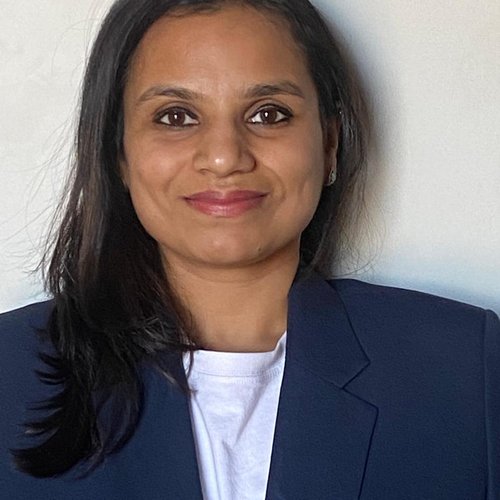
Chhavi is a dedicated mathematics educator with over 10 years of experience helping students build confidence and mastery in algebra, pre-algebra, and geometry. She has worked with hundreds of students across online and classroom settings, specializing in personalized instruction that combines clear conceptual understanding with practical problem-solving skills. Chhavi excels at meeting students where they are and creating learning experiences that make math accessible and engaging for learners in grades K-10.
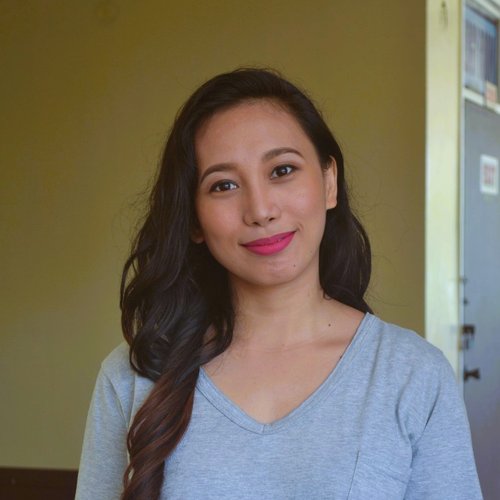
Indi P. is a math teacher with 7 years of online teaching experience, specializing in Algebra and Geometry for middle and high school students. She has a proven track record of helping students build confidence and master challenging concepts through clear explanations and patient instruction. Indi works with students in grades 6-10 and is dedicated to making math accessible and engaging.
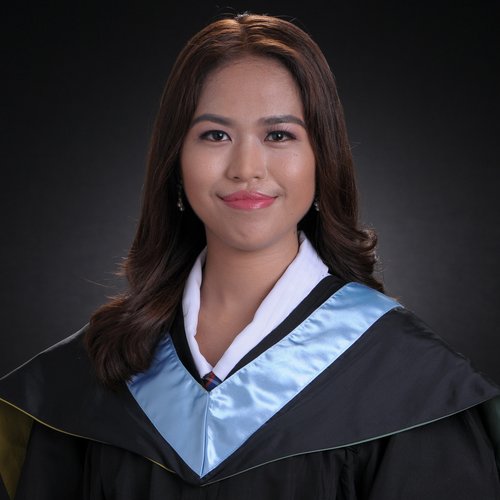
Jackielyn Rose C. is a professional mathematics teacher with 3 years of experience helping USA students across multiple states master algebra, pre-algebra, and geometry. She has a passion for breaking down complex math concepts into clear, understandable lessons and is currently pursuing her post-graduate studies to deepen her expertise. When she's not teaching, Jackielyn enjoys solving math problems and playing guitar.

Veteran professional with teaching experience in the American schools and Philippine schools. Proven track record in improving student engagement, success and test scores. I have a TEFL certification. Adept at teaching problem-solving skills and using creative approaches to engage students with challenging concepts. Passionate about helping students reach full potential and develop a lifelong love of mathematics.

Nida M. is an experienced math tutor with over 8 years of teaching algebra, pre-algebra, and geometry to middle and high school students. She specializes in breaking down complex concepts into simple, engaging lessons using real-life examples and interactive activities. Nida focuses on building strong foundational understanding and boosting student confidence so they not only master the material but actually enjoy learning math.

Nusrat A. is an experienced math educator with over 10 years of teaching experience across leading online platforms. He specializes in helping middle and high school students master algebra, pre-algebra, and geometry through engaging, conceptual approaches. Nusrat is passionate about building student confidence and making math accessible to learners of all levels.
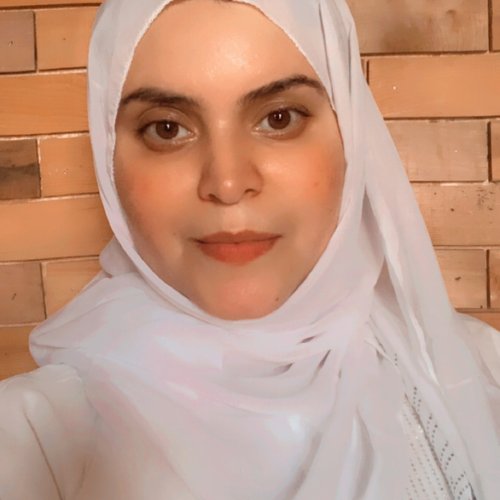
Sabirah K. is a dedicated mathematics educator with over 10 years of teaching experience at leading educational institutions. She holds a Bachelor's degree in Mathematics, Physics, and Statistics, and brings proven expertise in algebra, pre-algebra, and geometry for middle and high school students. Her track record includes developing engaging lesson plans and helping students master complex concepts through patient, personalized instruction.

Few tutors can say they hold a Prime Minister's Research Fellowship and have spent over 12 years teaching high school Math — but Saran can. A PhD in Engineering Design from IIT Madras, he brings the same systematic rigor to a 9th-grade algebra session that he applies to research, and his patient, personalized approach has helped students at every level build lasting mathematical confidence.

Shreshtha is a dedicated mathematics educator with over 3.5 years of experience teaching more than 400 students. She holds a B.Sc. and M.A. degree and has delivered 1,200+ one-on-one tutoring sessions, giving her deep insight into different learning styles. Her teaching approach focuses on building strong conceptual understanding by encouraging students to think logically and ask critical questions, making mathematics engaging and intuitive.

Yurev Ross is an experienced online math tutor with 4+ years of experience helping high school students master everything from algebra to AP Calculus. He specializes in geometry and calculus, bringing a teaching style that encourages students to think independently through hands-on exercises and guided problem-solving. Yurev believes in empowering learners to become confident mathematicians by asking the right questions and building strong foundational skills.

Aishwarya is an experienced mathematics tutor with over 10 years of teaching experience across school and undergraduate levels. She specializes in algebra, pre-algebra, and geometry for middle and high school students. Aishwarya is passionate about helping students build confidence in math through collaborative problem-solving and personalized one-on-one instruction.

Andrew brings more than two decades of math tutoring experience, helping high school learners turn confusing formulas into clear, doable steps. His engineering background makes his lessons practical and easy to relate to, especially for students preparing for advanced math, STEM pathways, and college prep. Parents appreciate his steady guidance and his ability to build confidence in even the most hesitant learners.

Gerald is an enthusiastic math tutor with three years of teaching experience, including one year tutoring students online and two years teaching Grade 11 Mathematics in traditional classrooms. He currently works as a college instructor, which has strengthened his ability to adapt to different learning styles and create encouraging learning environments. Gerald's positive outlook and strong commitment to student success make him dedicated to helping middle and high school students master algebra, pre-algebra, and geometry.

Lyka Anne has spent six years teaching high school Math, specializing in Calculus, Algebra, and Statistics. She breaks complex problems into clear, manageable steps and creates a collaborative classroom where questions are welcomed and curiosity drives progress. Her approach makes even the toughest topics feel like puzzles worth solving, not procedures to memorize.

Nitish Y. is a results-driven mathematics tutor with 6+ years of experience and over 5,000 hours of teaching middle and high school students. He specializes in making algebra, pre-algebra, and geometry intuitive by connecting concepts to real-life applications, helping students build both confidence and genuine understanding. His approach focuses on developing strong conceptual foundations so students not only perform better on assignments and tests, but develop critical thinking skills they can apply beyond the classroom.
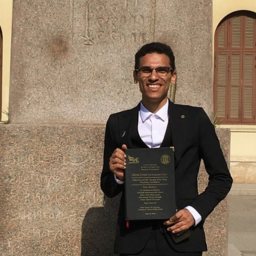
Omar has taught students from the U.S., Europe, and Asia, using an adaptable approach that helps learners grasp challenging concepts with clarity. His background in aviation research brings real-world depth to his math and physics lessons, while his structured English guidance supports reading, grammar, and academic writing. He focuses on building student confidence—one breakthrough at a time.

Poornima is a highly trusted math educator with 10+ years of experience and a proven record of simplifying even the toughest concepts. She specializes in upper-grade math aligned with U.S. standards and helps students feel confident, motivated, and ready for higher-level coursework. Her creative explanations make math understandable-and even enjoyable.
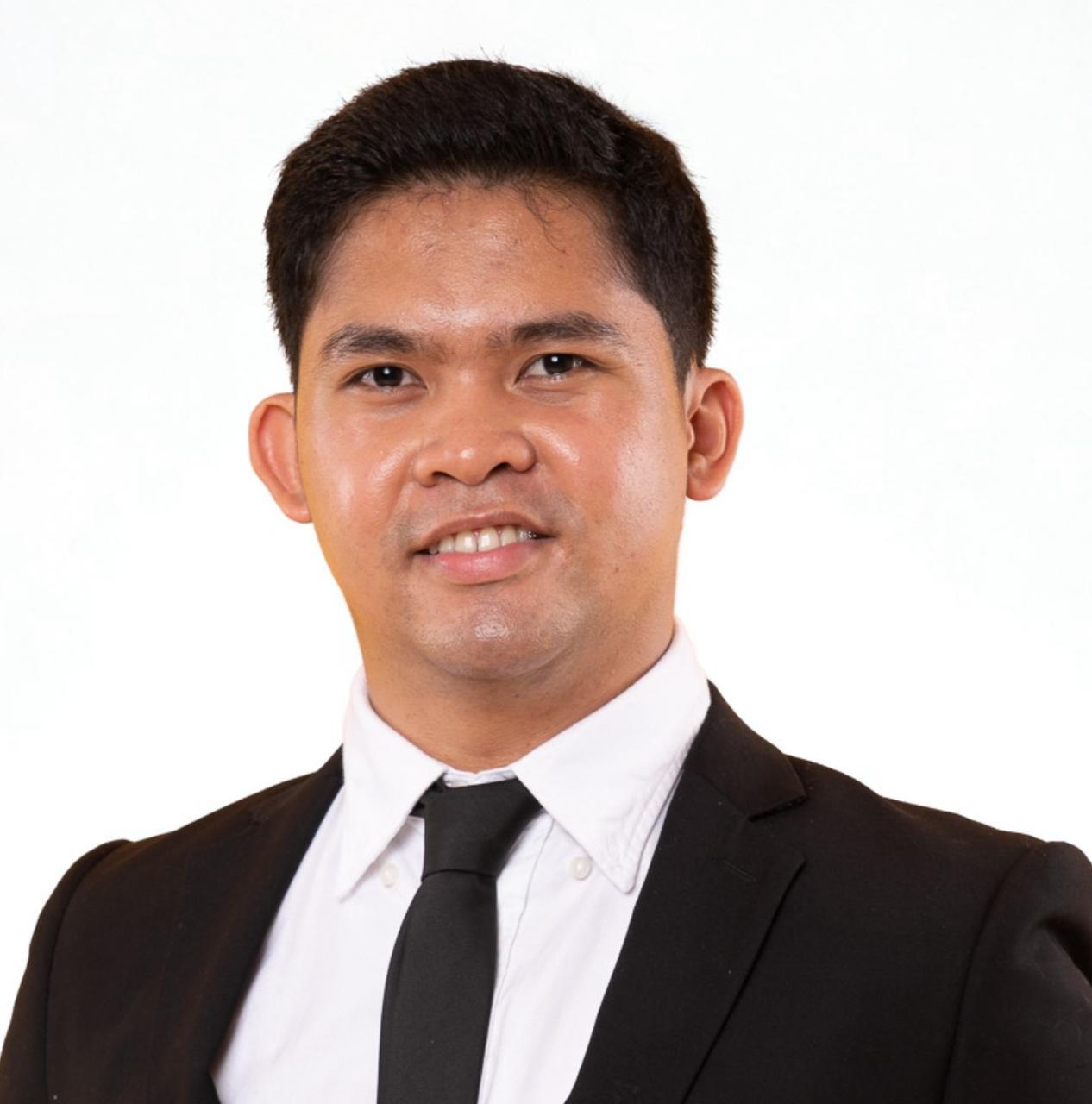
Ram is a respected math educator with years of experience teaching in international schools and leading curriculum development. His lessons blend clarity, logic, and real-world application, helping students strengthen conceptual understanding and critical thinking. Families value his calm teaching style and commitment to each child’s success.

As an educator and researcher with over six years of experience, I bridge the gap between complex scientific theory and student comprehension. My background in Biotechnology and Bioengineering provides a unique foundation for my teaching; rather than simply delivering facts, I focus on the "why" and the "how." I draw from my own research experiences in clinical oncology and immunology to make classroom concepts feel tangible, urgent, and relevant to the real world.

Syamala is an electronics engineer and certified CBT professional with decades of tutoring experience. She believes every student has untapped potential and specializes in helping middle and high school students build confidence in algebra, pre-algebra, and geometry. Her approach focuses on identifying each student's unique strengths and providing targeted support to unlock their mathematical abilities.
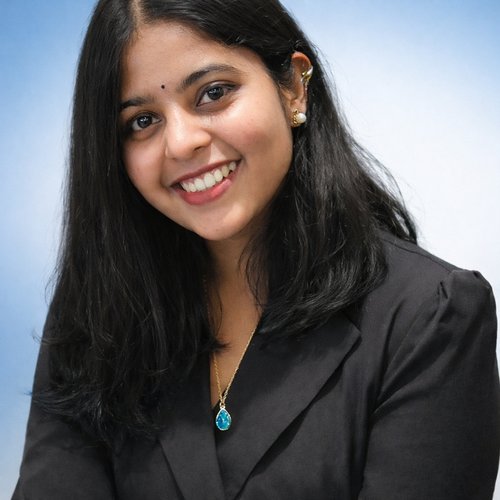
Timsy G. is a passionate mathematics tutor with over two years of teaching experience dedicated to creating engaging learning experiences for middle and high school students. Specializing in geometry and trigonometry, Timsy uses innovative methods and technology to help students build confidence and mastery in challenging math concepts. Known for a curious and dedicated approach to instruction, Timsy continuously explores new teaching strategies to meet each student's unique learning needs.
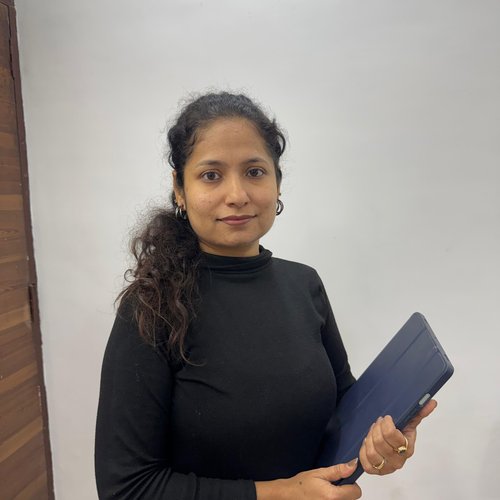
Varsha is an experienced mathematics tutor who specializes in making algebra, pre-algebra, and geometry accessible and enjoyable for high school students. She focuses on strengthening fundamental concepts and building logical thinking skills through a student-friendly teaching approach. Her passion is helping learners develop genuine understanding rather than just memorizing procedures.
Geometry spans grades 8 through 10 for most students, starting with transformations and the Pythagorean Theorem and building toward formal proofs, trigonometry, and circle theorems. The subject feels different from every math course before it, and that shift catches students off guard before they understand what changed.
This is where the curriculum shifts most dramatically. Students who did well in Algebra by following procedural steps run into a course that demands something different: justification. Every statement must be licensed by a definition, postulate, or previously proven theorem. The content is wide, covering triangle congruence (SSS, SAS, ASA, AAS, HL per CCSS HSG.CO.B.7–8), formal two-column and paragraph proofs (CCSS HSG.CO.C.9–11), similarity and proportional reasoning (CCSS HSG.SRT.A.1–B.5), right triangle trigonometry with special right triangles (CCSS HSG.SRT.C.6–8), circle theorems including inscribed angles and arc length (CCSS HSG.C.A.1–B.5), coordinate geometry proofs using slope, distance, and midpoint (CCSS HSG.GPE.B.4–7), and 3D solids and cross-sections (CCSS HSG.GMD.A.1, A.3, B.4).
Where students get stuck is almost always proofs. They can state that vertical angles are congruent, but they cannot construct the argument because they do not recognize when a justification is required versus when something is given. On a test, a student writes "Statement: △ABC ≅ △DEF | Reason: They look the same," or invokes CPCTC before establishing triangle congruence. These are not careless errors. They reflect a genuine gap in understanding what a proof is for.
Geometry doesn't get harder. It gets more logical, and logic punishes a different kind of gap than arithmetic or algebra ever did.
The most common geometry failure is not a content gap. It is a structural one. Students treat proofs as explanations of what they observe rather than as chains of licensed statements. The difference is not subtle on a test. Given "Prove that the diagonals of a parallelogram bisect each other," a student with this misconception writes: "The diagonals cross in the middle because parallelograms are symmetric, so they cut each other in half." No congruent triangles. No SAS. No CPCTC. The reasoning sounds sensible and earns almost no credit.
Classroom instruction covers proof format but rarely addresses why the format exists. With 30 students and one pass through the chapter, most teachers move on before the underlying logic clicks. Vani, one of our geometry tutors, consistently observes this in 9th grade students: in a recent session, a student could identify every pair of congruent angles in a diagram but wrote a paragraph instead of a proof because no one had explained that the columns enforce an order of reasoning, not just a presentation style. Once that distinction was made explicit, the student restructured the same proof correctly in the same session.
Self-diagnostic signal: If your child can explain why something is true in words but loses most of the points on proof questions, this is almost certainly the active gap.
The fix: Work backward from the conclusion, identifying which postulate or theorem would justify it, then chain the statements in reverse order until the givens are reached. This "proof by reverse engineering" makes the logical structure visible before students attempt to build it forward.
Students who sail through the visual portion of transformations hit a wall the moment problems require coordinate precision. They know what a rotation looks like. They do not know that rotating a point (x, y) by 90° counterclockwise produces (−y, x), not (y, x) or (−x, −y). The sign change is not intuitive, and it is not emphasized enough in class for students to commit it reliably.
Three error forms appear regularly. First, the coordinate swap without the sign change: (3, 4) rotated 90° counterclockwise becomes (4, 3) instead of (−4, 3). Second, applying the wrong rule entirely: students use the 180° rule for a 90° rotation because both involve negatives. Third, correct rotation but wrong center: rotating about a point other than the origin without adjusting the coordinates first.
Jhuzen, one of our math tutors, noted in an 8th grade session earlier this year that encouraging students to annotate the coordinate rules directly on their diagram, rather than working mentally, eliminated most of these errors within two sessions. The student had understood the concept but had no reliable procedure to execute it under test conditions.
Self-diagnostic signal: If your child can describe a transformation correctly in words but loses points on coordinate problems, the gap is procedural, not conceptual.
The fix: Drill the four rotation rules as a reference card, then practice applying them to 5–6 coordinate pairs before any diagram work. Separating the algebraic rule from the geometric picture prevents the two from interfering with each other.
Similarity problems collapse for many students when the figures are oriented differently or when only partial information is given. Students who understand similarity as a visual concept set up proportions incorrectly because they match sides by position in the diagram rather than by their correspondence in the similarity statement. The result: they write AB/DE = BC/EF correctly, then substitute the wrong values because they read the diagram left-to-right instead of following the correspondence △ABC ~ △DEF.
This misconception shows up on every geometry EOC and on the SAT Math section. It is not a computation problem. The setup is wrong before any arithmetic begins.
Self-diagnostic signal: If your child sets up the proportion and then gets the wrong answer, and the error is in which numbers go where rather than in the cross-multiplication, this is the active gap.
The fix: Require students to label corresponding vertices explicitly on the diagram before writing any proportion. One session of enforcing this habit typically eliminates the substitution error permanently, because the visual and the symbolic are no longer in competition.
All three of these are diagnosable in a single conversation with an experienced tutor, and each closes in a handful of focused sessions, not a semester of re-teaching.

Proofs. Theorems. Spatial reasoning. These don't feel like math to most students who've spent years on arithmetic and algebra. Our tutors know how to bridge that gap — how to build logical reasoning skills and connect them to the geometric content, rather than just introducing the content and hoping it sticks.

Geometry struggles come in two types: students who can't follow the logic of a proof, and students whose algebra is weak enough to break down in coordinate geometry. Those need completely different approaches. The first session tells us which we're dealing with.

A tutor who has worked with your child for a month knows which theorems they've genuinely absorbed and which ones they can recite but not apply. That's the distinction that matters in geometry. It takes time to learn, and it resets every time the tutor changes.

We work from your child's actual geometry course — the theorem sequence, the proof format, the exact conventions their teacher uses. No situation where the tutor and teacher approach the same proof differently.
Try our online tutoring risk-free!
ZERO cost, NO credit card details required. Cancel anytime
Book your first 1-hour session NOW!
For most students, yes — and the format removes practical barriers that cause in-person tutoring to lapse. Online sessions use digital whiteboards and annotation tools that let tutors draw diagrams, highlight angles, and walk through constructions in real time. Students can annotate directly on problems, which our session observations show reduces computational errors in multi-step geometry work. Consistency matters more than format — a student who attends every weekly session online will progress faster than one who occasionally meets an in-person tutor.
Khan Academy and video resources explain concepts but cannot respond to your child's specific mistake, ask follow-up questions, or adjust in the moment when something isn't landing. Ruvimo provides a live, one-on-one tutor who sees exactly where the student's reasoning breaks down — whether that's a missing step in a proof, a formula applied to the wrong shape, or a diagram misread entirely. The tutor adapts within the session, not between videos. Notes, progress summaries, and consistent pacing are also not available through self-directed platforms.
Most students show measurable progress within four to six sessions, particularly in applying formulas and working through multi-step diagram problems. Confidence with the material tends to improve before test scores do. One Grade 8 student in our sessions reached a score of 70 on a linear geometry test after consistent sessions, with the parent noting steady academic progress tied directly to the tutor matching the student's learning pace. Results depend on frequency, but weekly sessions with the same tutor produce the most consistent gains.
It is common. Algebra rewards procedural fluency — follow the steps, get the answer. Geometry proofs require a different skill: constructing a logical argument from given information to a conclusion. Students who are strong with equations sometimes find this shift disorienting. Ruvimo tutors address this by breaking proof structure into stages — identifying givens, selecting the appropriate theorem, and building the argument step by step — rather than expecting students to produce a full proof without scaffolding.
After each session, parents receive a written summary covering what was taught, how the student performed, any concepts that need reinforcement, and the practice assigned. This is sent promptly after the session ends — not in a weekly batch. Grade 8 parents in our sessions have noted that receiving notes immediately after class, rather than days later, made a direct difference in how effectively their child practiced between sessions. The summary gives parents visibility without needing to sit in on the lesson.
The tutor opens by reviewing any tests, quizzes, or homework since the last session, then works through the current concept — whether that's angle proofs, circle theorems, or coordinate geometry. Sessions use digital diagrams and annotation tools, and students are encouraged to annotate problems directly rather than working through steps mentally, which our session data shows reduces errors in multi-step problems. The session ends with practice problems. Afterward, the tutor sends written notes and any assigned practice so parents and students have a clear record.
Yes. Tutors align sessions to the student's current school syllabus, not a generic geometry sequence. At the start of engagement, the tutor reviews what topics are active in the student's class and structures sessions around those. An AI-generated lesson plan is prepared before each session based on recent session notes and upcoming school material. This is why parents in our Grade 10 sessions have noted satisfaction with pacing — the tutor isn't running a separate curriculum in parallel.
Yes. Ruvimo tutors work with students in standard, honors, and accelerated geometry courses. Honors-level work typically involves formal proofs, constructions, and more rigorous coordinate geometry — areas where the tutor adjusts the session depth accordingly. Before each session, the tutor reviews an AI-generated lesson plan aligned to the student's current course level, so the pacing fits whether the student is covering basic angle relationships or preparing for a proof-heavy honors exam.
Both. Tutors work through homework problems with students and teach the underlying concepts in the same session. In practice, a student might arrive with a worksheet on triangle congruence, and the tutor will use those problems to clarify the concept while completing the assignment. After the session, the tutor sends notes and the completed work so students can reference them during independent practice — a step parents in our Grade 8 sessions have directly credited for score improvement.
We swap the tutor — no charge, no questions asked. A personality or teaching-style mismatch doesn't mean tutoring won't work; it just means a different tutor is a better fit. Because Ruvimo assigns the same tutor to every session by default, it's easy to tell within the first few sessions whether the pairing is working. If it isn't, families request a change and a replacement is arranged before the next scheduled session.
Every tutor goes through AI-assisted screening followed by a manual review of credentials, teaching history, and subject knowledge before being approved. Ruvimo tutors are based in India, the Philippines, and Africa, and all hold verified academic qualifications in mathematics. Subject competency is assessed specifically — a tutor approved for geometry has demonstrated they can teach geometry, not just general math. Credentials are reviewed before a tutor ever works with a student.
Ruvimo sessions start at $36 per session, which is significantly below the typical market rate of $60–$100 per hour for private math tutoring. There are no contracts, no enrollment fees, and no cancellation penalties. New families start with a free trial session before committing to anything. Every session is one-on-one with the same tutor, so your child isn't re-explaining where they left off each week.


