Struggling with Algebra 2, Calculus, or basic math? Ruvimo offers expert online math tutoring for grades K–12.
From 3rd grade arithmetic to AP Calculus. Our 1-on-1 sessions build confidence, improve grades, and make math easier — All from home

.png)

Marco is a patient mathematics tutor with over 10 years of experience helping high school students master algebra, pre-algebra, and statistics. He holds a Master's degree in Applied Mathematics and brings both deep subject knowledge and proven teaching skills to every session. Marco is committed to building students' confidence and genuine understanding of mathematical concepts.

Poornima is a highly trusted math educator with 10+ years of experience and a proven record of simplifying even the toughest concepts. She specializes in upper-grade math aligned with U.S. standards and helps students feel confident, motivated, and ready for higher-level coursework. Her creative explanations make math understandable-and even enjoyable.
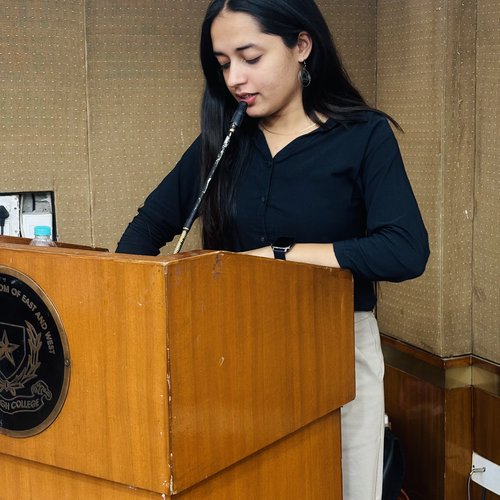
Priya is a Mathematics graduate with extensive experience tutoring high school students in trigonometry, pre-calculus, and calculus. She has mentored over 200 learners across grades 9–12, creating personalized lesson plans that adapt to each student's learning style. Known for her clear explanations and patient approach, Priya helps students build confidence and master challenging concepts.

Barnali D. is a passionate mathematics tutor with 5 years of experience delivering engaging virtual lessons to elementary and middle school students. She specializes in creating interactive learning environments using modern online tools, helping students build confidence and mastery in math. Her student-centered approach makes complex concepts accessible and fun for learners of all levels.

Monika is a mathematics educator with over 5 years of experience teaching K–12 students across multiple curricula, including US Common Core and SAT Math. She specializes in concept-focused, student-centered instruction that builds problem-solving skills and boosts academic performance. Monika designs personalized lessons and assessments tailored to each student's learning style, with proven success helping students master foundational math through advanced topics.

Jhon Paulo is a physics-focused mathematician with expertise in theoretical and instrumental physics who brings a unique problem-solving perspective to algebra, pre-calculus, and calculus. With strong coding skills alongside his math background, he helps students build deeper conceptual understanding rather than just memorizing procedures. He specializes in working with high school students in grades 9–12 and is skilled at breaking down complex mathematical concepts into manageable, logical steps.

Shamsiya S. is an experienced online tutor specializing in elementary mathematics for K-5 students. She excels at breaking down foundational concepts into simple, engaging lessons that build both skills and confidence. Shamsiya tailors her teaching to each student's unique learning style, helping young learners develop strong problem-solving abilities and a genuine love for math.

Jonah is an enthusiastic math educator with nearly 5 years of classroom experience teaching young learners. He specializes in helping elementary and PreK students build confidence and understand how math applies to everyday life. Jonah believes every child is capable of learning math and is committed to making the subject engaging and meaningful.

Gideon Wakama is a mathematics educator with over four years of experience teaching high school students in both classroom and online environments. He specializes in algebra, pre-calculus, and calculus, and excels at connecting abstract concepts to real-world applications through structured lesson planning and exam preparation. Gideon designs personalized assessments and helps students build problem-solving confidence, whether they're strengthening foundations or preparing for advanced coursework.

Lyka Anne has spent six years teaching high school Math, specializing in Calculus, Algebra, and Statistics. She breaks complex problems into clear, manageable steps and creates a collaborative classroom where questions are welcomed and curiosity drives progress. Her approach makes even the toughest topics feel like puzzles worth solving, not procedures to memorize.

Aishwarya is a math enthusiast and dedicated researcher who transforms complex mathematical concepts into clear, understandable lessons. She specializes in helping high school students master trigonometry, pre-calculus, and calculus by going beyond formulas to explain the 'why' behind each concept. Her approach builds both confidence and genuine appreciation for mathematics, turning abstract ideas into logical puzzles students can solve and understand.

Shreshtha is a dedicated mathematics educator with over 3.5 years of experience teaching more than 400 students. She holds a B.Sc. and M.A. degree and has delivered 1,200+ one-on-one tutoring sessions, giving her deep insight into different learning styles. Her teaching approach focuses on building strong conceptual understanding by encouraging students to think logically and ask critical questions, making mathematics engaging and intuitive.

With 20+ years of experience, Neha creates a warm, supportive environment where students feel safe to ask questions and grow. She blends Montessori principles with structured math practice, helping children build fluency, confidence, and a genuine love for learning.

Indi P. is a math teacher with 7 years of online teaching experience, specializing in Algebra and Geometry for middle and high school students. She has a proven track record of helping students build confidence and master challenging concepts through clear explanations and patient instruction. Indi works with students in grades 6-10 and is dedicated to making math accessible and engaging.

Arvind S. is a mathematics educator who specializes in making math meaningful and accessible for elementary and middle school students. He builds strong conceptual understanding through problem-solving, real-life applications, and interactive tools that help students visualize mathematical ideas. By connecting abstract concepts to everyday situations and encouraging curiosity, Arvind creates engaging learning experiences where students develop confidence and lasting math skills.

Sabirah K. is a dedicated mathematics educator with over 10 years of teaching experience at leading educational institutions. She holds a Bachelor's degree in Mathematics, Physics, and Statistics, and brings proven expertise in algebra, pre-algebra, and geometry for middle and high school students. Her track record includes developing engaging lesson plans and helping students master complex concepts through patient, personalized instruction.

Ankita S. is an M.Sc. B.Ed. with a genuine passion for making mathematics accessible and engaging for elementary and middle school students. She specializes in building strong foundational skills and helping students develop confidence in math. Ankita's teaching approach focuses on making concepts clear and relatable so that every student can succeed.

Kanan is a passionate mathematics educator with extensive experience teaching Grades 3–8 students. She specializes in making math concepts clear, engaging, and meaningful, helping students build confidence and develop strong problem-solving skills. Kanan believes every child can succeed in math with the right support and creates a learning environment where students actually enjoy the subject.

Ajay R. has been teaching mathematics online since 2008, bringing over 15 years of experience to help students master Algebra, Geometry, and advanced topics. He specializes in working with high school students (grades 9–12) on the US curriculum, breaking down complex concepts into clear, manageable steps. His long track record of online instruction means he knows how to keep students engaged and motivated through screens.

Shwetank studied Electronics Engineering but spent his university years on stage — performing guitar and vocals at events, weddings, and restaurants across India. He now channels both sides of that background: teaching Music with a performer's instincts and middle school Math with an engineer's logic, making abstract concepts feel grounded and learnable.

Omar P. is a Bachelor of Science in Mathematics with over 18 years of teaching experience across English, Mathematics, and Physics. He has successfully worked with students from elementary through adult levels in diverse learning environments. Currently working in the aviation industry, Omar brings strong bilingual communication skills and real-world mathematical applications to his tutoring.

Dhanraj is a Mechanical Engineering graduate with 8 years of mathematics teaching experience. He specializes in helping middle and high school students master algebra, pre-algebra, and trigonometry through conceptual understanding and real-world applications. Dhanraj has a proven track record preparing students for standardized tests like the SAT and AMC, building strong problem-solving skills that lead to excellent exam results.

Rudhrakshi is a dedicated mathematics educator with a Master's degree in Physics and over 6 years of teaching experience. She specializes in helping high school students master trigonometry, pre-calculus, and calculus through a blend of conceptual clarity and rigorous problem-solving practice. Her approach focuses on building strong foundational understanding so students can tackle challenging exams and advanced coursework with confidence.

Vibhu brings a lively, engaging approach that turns math from intimidating to exciting. With a focus on patterns, logic, visual learning, and real-life problem-solving, Vibhu helps students build confidence and curiosity at every level. Whether a child struggles with fractions or needs a push toward higher-level thinking, Vibhu makes math feel approachable, fun, and full of possibilities.
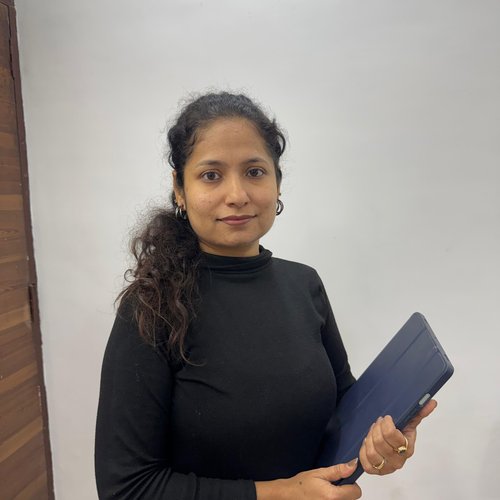
Varsha is an experienced mathematics tutor who specializes in making algebra, pre-algebra, and geometry accessible and enjoyable for high school students. She focuses on strengthening fundamental concepts and building logical thinking skills through a student-friendly teaching approach. Her passion is helping learners develop genuine understanding rather than just memorizing procedures.
Finding the best online math tutor can change everything. At Ruvimo, we've provided personalized online math tutoring for hundreds of K-12 students across America. Our online math tutoring services pair your child with only the top 1% tutors. All of them are university-qualified tutors who use actual textbooks—not generic worksheets—to build real understanding and lasting confidence.
Whether your child needs help catching up in elementary math or mastering calculus tutoring online, we believe every student can succeed with the right support and guidance.
Parents from Texas to California, New York to Florida choose Ruvimo for online math tutoring that actually works:
Founders have 15+ years experience in education
4.9 out of 5 stars from hundreds of families
92% of students improve at least one letter grade within 12 weeks
Available in all 50 states—wherever you are, we're here to help
Watching your child lose confidence can be heartbreaking. You're not alone.
Over half of students in the U.S. struggle to keep up with grade-level math. But honestly? These statistics don't keep you up at night.
What keeps you up is watching your child's frustration. The tears over homework. The "I'm just not good at math." The way they've started to believe it.
Here's what most parents don't realize: classroom teachers are doing heroic work. But with 28 kids, a packed curriculum, and mounting pressure to push forward, they simply can't:
So kids nod, pretend to understand, and move on. Small gaps widen. Confusion compounds. Self-doubt takes root.
Math isn't like spelling or social studies. It's cumulative—each concept builds on the last. Missing fundamentals in 3rd grade becomes struggling with fractions in 5th. By 8th grade, they're drowning in Algebra.
One dad told us: "It's like they're trying to build the second floor of a house when the foundation is still shaky. Every day they add more weight to a structure that can't support it."
That's where online math tutoring makes the difference. Personalized attention changes everything.
When you're searching for online math tutoring services, you want to know what actually sets one apart from another. Here's why families stick with Ruvimo:
We Use Your Child's Actual Textbook
Most online math tutoring platforms use generic materials that don't match what your child sees in class. We work directly from their textbook, so everything connects to their homework and tests. No confusion about "why does my teacher do it differently?"
University-Qualified Tutors Who Know How to Teach
Unlike platforms that hire anyone with decent math skills, every Ruvimo online math tutor is university-qualified and rigorously vetted. Only the top 1% tutors get through. Our tutors don't just know math—they understand how kids learn it.
Careful Matching, Not Random Assignment
We don't just give you the next available tutor. We match your child with the best online math tutor for their specific learning style, personality, and needs. The connection matters as much as the credentials.
Technology That Actually Enhances Learning
Our online math tutoring platform includes interactive digital whiteboards, screen sharing, session recordings, and real-time feedback. These tools make virtual learning more effective than traditional in-person tutoring for many kids.
Proven Results You Can See
92% of students improve at least one letter grade within 12 weeks. But the real magic? Parents tell us things like: "Math homework isn't a battleground in our house anymore. I can't put a price on that peace."
Nationwide Availability When You Need It
Whether you're in a small town in Montana or a suburb outside Dallas, our online math tutors are available when you need them. No driving across town. No rushing from soccer practice to a tutoring center.
Not all online tutoring is created equal. You've probably tried YouTube videos, maybe even other tutors. Here's what makes our approach different:
Our online math tutors build genuine connections first. They learn what lights your child up, how they learn best, and where their mathematical journey went sideways.
One mom put it perfectly: "My daughter didn't just get an online math tutor. She got someone who truly 'gets' her—and that's when math finally clicked."
More practice doesn't help when the foundation is shaky. We identify and fill specific knowledge gaps that block progress.
One of our students was struggling with fractions. His tutor didn't pile on more fraction problems. She discovered he never fully grasped multiplication in elementary math. Three sessions later, with multiplication solidified, fractions suddenly made sense.
Before jumping into teaching, we carefully identify specific skill gaps and learning preferences. This isn't about labeling or judging—it's about finding the perfect starting point for your child.
Academic progress without confidence is temporary. Our online math tutors celebrate small wins, normalize struggle as part of learning, and transform "I can't" into "I'm figuring it out."
Jason's mom shared: "After his first small success, my son sat up straighter. After three sessions of online math tutoring, he started raising his hand in class again. That's worth more than any grade."
When Michael started with us, he'd been labeled "not mathematically inclined" by well-meaning teachers. Six weeks later, his mom texted: "He solved the whole worksheet independently and asked for more. WHO IS THIS CHILD?"
Michael's math ability hadn't changed. What changed was how math was being taught to him. His online math tutor discovered he needed concepts presented visually, repeated in specific patterns, and connected to his passion for basketball.
That's the power of one-on-one online math tutoring:
Surely classroom teachers dream of providing this. Most simply can't. Here's what some parents have to say about our tutors:
"Raelynn is consistent in progress with Ms. Lizzy. It is actually going better than expected. Raelynn has improved so much during her time with Ms. Lizzy . Her counting is increasing she enjoys her time with Ms. Lizzy she looks forward learning with her." - Taylor, mom of a 1st grader
"Ms. Shubhra is highly consistent and very clear in her direction. Her approach is focused, and easy to understand, which makes learning effective and structured. I truly appreciate her clarity, patience, and dedication toward my child’s progress." - Bilan, mother of a 5th grader
"I am very happy with Jude’s teaching approach. He uses repetition effectively to ensure that Symphony understands the concepts and stays focused. He is calm and patient, even when she makes mistakes, which keeps the learning environment positive and encouraging. His approach has made a noticeable impact on Symphony’s confidence. I would absolutely love for Jude to continue as her tutor long-term." - Tracy, mom of a 3rd grader
"Whenever Vaibhav attends class, he develops a strong understanding of the concepts taught. He is generally a shy child and takes time to open up with new people, but with Richa, the connection was built very naturally and smoothly. He now feels more comfortable participating, which has had a very positive impact on his learning and confidence." - Shaveta, mother of a 10th grader
Whether your child is just starting their math journey or tackling advanced concepts, we provide expert support:
Elementary (K–5): Foundational skills, number sense, and word problems
Middle School (6–8): Pre-algebra, geometry basics, ratios, and proportions
High School (9–12): Algebra 1 & 2, trigonometry, statistics, precalculus, and calculus tutoring online
Test Prep: ACT/SAT math, AP exams, and timed problem-solving strategies
Young mathematicians need concrete understanding before abstract concepts. Our elementary tutors specialize in:
Grades 3-5 introduce concepts that challenge many students. Our tutors focus on:
Middle school math represents a significant leap in abstraction. Our tutors help with:
High school math brings new challenges and opportunities. Our tutors specialize in:
Standardized tests require specific preparation strategies. Our tutors help students:
Parents sometimes worry that online can't match in-person. But here's what we've learned after 15 years: quality online math tutoring services often work better than traditional approaches. Here's why:
Your child learns in their most comfortable environment—home. No driving across town during rush hour. No rushing from soccer practice to a tutoring center. No awkward waiting rooms. Just effective online math tutoring when and where it works for your family.
Less stress means better focus. Better focus means faster progress.
Our online math tutoring platform isn't just a video call. It's an interactive learning environment with:
For today's tech-savvy kids, these tools often engage them more effectively than paper and pencil.
Unlike in-person tutoring where everything ends when your child walks out the door, our online math tutoring extends beyond session time:
One parent told us: "My son watches the recordings before tests. Having his tutor's explanations on demand is a game-changer."
How many times has your child come home from tutoring and already forgotten the strategy they learned? With session recordings, that problem disappears. They can rewatch exactly how their online math tutor solved similar problems.
Online math tutoring is one-on-one instruction delivered virtually through video conferencing and interactive tools. At Ruvimo, our online math tutoring services connect K-12 students with university-qualified tutors who provide personalized math help from the comfort of home. It's not watching videos or doing worksheets—it's real-time instruction with a real person who adapts to your child's needs. And it's super interactive!
The best online math tutor matches your child's learning style, grade level, personality, and specific math challenges. Ruvimo considers all these factors—plus your child's interests and goals—to pair them with a tutor who can truly connect and deliver results. We don't believe in one-size-fits-all online math tutoring.
Most families see best results with 2-3 online math tutoring sessions weekly. We'll recommend the right frequency based on your child's specific needs and goals. Some students need intensive support for a few weeks, while others benefit from ongoing weekly sessions.
Most parents notice attitude changes within 2-3 weeks—less resistance to homework, more willingness to try. Grade improvements typically show within 4-6 weeks. For students with significant gaps, meaningful academic growth usually appears within one grading period (8-12 weeks).
Just a computer or tablet with internet connection. Our online math tutoring platform works with standard web browsers—nothing complicated to install or learn. If your child can watch YouTube or do a Zoom call, they can handle our technology.
Ruvimo's online math tutoring starts at $36 per session. Our most popular package provides 25 hours of tutoring sessions with discounts for more intensive schedules. During your free consultation, we'll discuss options that fit your budget and your child's needs.
Yes! Research consistently shows quality online math tutoring works as well or better than in-person. Our interactive platform, recording capabilities, and elimination of travel time often make online math tutoring services more effective than traditional approaches. Plus, kids are comfortable with technology—many actually focus better in this format.
Our online math tutors cover all K-12 subjects: elementary math, pre-algebra, Algebra I and II, geometry, trigonometry, statistics, pre-calculus, and calculus tutoring online. We also provide ACT/SAT math test prep and AP exam preparation (AP Calculus, AP Statistics).
While our matching is usually spot-on, sometimes a different tutor might better suit your child. Just let us know, and we'll find an alternative at no additional cost. The relationship matters, and we want your child working with the best online math tutor for them.
Your child can hold their textbook up to the camera, or we can use a digital version if available. Our online math tutors are experienced working with all major textbook publishers and can quickly adapt to any curriculum. The goal is making sure everything they learn connects directly to what they're doing in class.
Remember when your child approached new challenges with excitement instead of dread? When learning felt like an adventure, not a burden?
That child is still there. Behind the math frustration. Behind the "I can't" and "I'm just not good at this."
One parent recently told us: "I didn't just get my daughter's grades back. I got my daughter back."
That's what drives us at Ruvimo. Not just better math scores—though those certainly come. But the transformation that happens when a child rediscovers their capability, their confidence, and their joy in learning.
Your child deserves that breakthrough. And you deserve to stop worrying about math grades.
Ready to help your child overcome math struggles? Book a free 45-minute trial session with Ruvimo.
Let's start with a conversation about your child. We'll assess their needs, answer your questions, and recommend the best online math tutor for lasting success. No pressure, no obligation—just a chance to explore whether our online math tutoring services might be the right fit for your family.
In this free consultation, we'll:
94% of students discover their inner mathematician within 3 months
The question isn't whether your child can succeed in math. The question is: when will you give them the support that makes success possible?

UNIVERSITY QUALIFIED INSTRUCTORS
Learn from certified math tutors with degrees from top universities. Our team includes experts in Algebra, Calculus, Geometry, and more - ready to help students in grades K-12 succeed.

VETTED FOR QUALITY TEACHING
We carefully select educators who not only know their subject—but also know how to teach it. Our tutors are friendly and patient, so it's easy to ask questions and understand concepts more thoroughly.

SAME TUTOR ALL ALONG
No switching around. Your child works with the same dedicated tutor in every session, building trust, confidence, and consistent progress. No rotating teachers—just consistent, personalized support.

IMPROVE GRADES AND CONFIDENCE
Our 1-on-1 online tutoring helps students quickly improve test scores, grasp new math concepts, and feel more confident in class. Our expert tutors know exactly how to get you there.

SAME TEXTBOOK
We use your child’s actual school textbooks to ensure perfect alignment with U.S. math standards. Whether it's Common Core, state curriculum, or test prep—we reinforce what’s taught in class.

ONLINE CONVENIENCE 1-ON-1
Your child joins live math tutoring sessions from home, anywhere in the U.S. Flexible scheduling, real-time help, and interactive tools make online learning easy and effective.
Try our online tutoring risk-free!
ZERO cost, NO credit card details required. Cancel anytime
Book your first 1-hour session NOW!


Trusted by 1000+ Families

98% Satisfied Customers

95% Grades Improved
.webp)
.png)
.png)
.webp)