

Algebra builds on itself — a shaky foundation in 6th grade shows up as a failing grade in 9th. Your child works with the same tutor every session, so gaps get caught early and fixed before they compound. Live, 1-on-1 instruction means your tutor adapts in real time to exactly where your child is stuck.



Abhishek graduated from two of the world's most competitive engineering programs — IIT Patna and BITS Pilani — and has spent the past six years helping high school students crack the same kind of problems that once challenged him. His lessons connect Math and Physics to real engineering thinking, and parents regularly see their kids shift from struggling to confident.

Ajay R. has been teaching mathematics online since 2008, bringing over 15 years of experience to help students master Algebra, Geometry, and advanced topics. He specializes in working with high school students (grades 9–12) on the US curriculum, breaking down complex concepts into clear, manageable steps. His long track record of online instruction means he knows how to keep students engaged and motivated through screens.

Akshay holds a Master's degree in Engineering from one of the world's most rigorous STEM institutes and has spent five years helping high school students master advanced mathematics. He specializes in AP Calculus, AP Statistics, and algebra through pre-calculus, teaching from first principles to build genuine understanding rather than relying on memorization. Akshay's approach focuses on eliminating math anxiety and helping students see the logic behind every formula and concept.
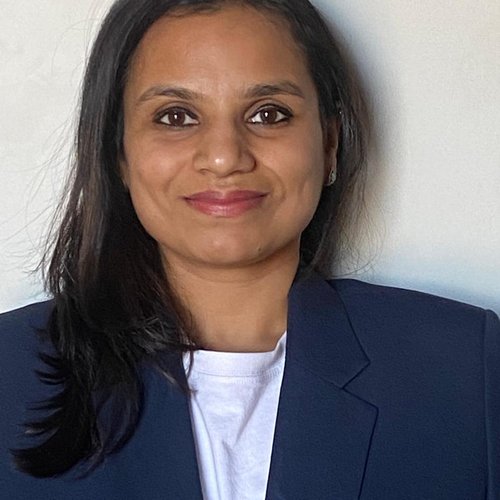
Chhavi is a dedicated mathematics educator with over 10 years of experience helping students build confidence and mastery in algebra, pre-algebra, and geometry. She has worked with hundreds of students across online and classroom settings, specializing in personalized instruction that combines clear conceptual understanding with practical problem-solving skills. Chhavi excels at meeting students where they are and creating learning experiences that make math accessible and engaging for learners in grades K-10.
.png)
Teacher Christi is an engineer and educator currently teaching at one of the top state universities in the Philippines. She is pursuing her Master of Science in Teaching (Physics) and holds a professional teaching license in Mathematics. With her combined background in engineering, physics, and mathematics, Teacher Christi integrates analytical thinking and practical application in her lessons. She believes that learning happens best through doing, encouraging her students to be diligent and engaged in practice. Her love for mathematics motivates her to help students see the subject not as a challenge, but as a tool for discovery. Outside of teaching, she enjoys reading and exploring history, which broadens her perspective as an academic and lifelong learner.

Dhanraj is a Mechanical Engineering graduate with 8 years of mathematics teaching experience. He specializes in helping middle and high school students master algebra, pre-algebra, and trigonometry through conceptual understanding and real-world applications. Dhanraj has a proven track record preparing students for standardized tests like the SAT and AMC, building strong problem-solving skills that lead to excellent exam results.

Indi P. is a math teacher with 7 years of online teaching experience, specializing in Algebra and Geometry for middle and high school students. She has a proven track record of helping students build confidence and master challenging concepts through clear explanations and patient instruction. Indi works with students in grades 6-10 and is dedicated to making math accessible and engaging.

Jackielyn Rose C. is a professional mathematics teacher with 3 years of experience helping USA students across multiple states master algebra, pre-algebra, and geometry. She has a passion for breaking down complex math concepts into clear, understandable lessons and is currently pursuing her post-graduate studies to deepen her expertise. When she's not teaching, Jackielyn enjoys solving math problems and playing guitar.

Veteran professional with teaching experience in the American schools and Philippine schools. Proven track record in improving student engagement, success and test scores. I have a TEFL certification. Adept at teaching problem-solving skills and using creative approaches to engage students with challenging concepts. Passionate about helping students reach full potential and develop a lifelong love of mathematics.

Marco is a patient mathematics tutor with over 10 years of experience helping high school students master algebra, pre-algebra, and statistics. He holds a Master's degree in Applied Mathematics and brings both deep subject knowledge and proven teaching skills to every session. Marco is committed to building students' confidence and genuine understanding of mathematical concepts.

Nida M. is an experienced math tutor with over 8 years of teaching algebra, pre-algebra, and geometry to middle and high school students. She specializes in breaking down complex concepts into simple, engaging lessons using real-life examples and interactive activities. Nida focuses on building strong foundational understanding and boosting student confidence so they not only master the material but actually enjoy learning math.

Nusrat A. is an experienced math educator with over 10 years of teaching experience across leading online platforms. He specializes in helping middle and high school students master algebra, pre-algebra, and geometry through engaging, conceptual approaches. Nusrat is passionate about building student confidence and making math accessible to learners of all levels.

Sabirah K. is a dedicated mathematics educator with over 10 years of teaching experience at leading educational institutions. She holds a Bachelor's degree in Mathematics, Physics, and Statistics, and brings proven expertise in algebra, pre-algebra, and geometry for middle and high school students. Her track record includes developing engaging lesson plans and helping students master complex concepts through patient, personalized instruction.

Few tutors can say they hold a Prime Minister's Research Fellowship and have spent over 12 years teaching high school Math — but Saran can. A PhD in Engineering Design from IIT Madras, he brings the same systematic rigor to a 9th-grade algebra session that he applies to research, and his patient, personalized approach has helped students at every level build lasting mathematical confidence.

Shreshtha is a dedicated mathematics educator with over 3.5 years of experience teaching more than 400 students. She holds a B.Sc. and M.A. degree and has delivered 1,200+ one-on-one tutoring sessions, giving her deep insight into different learning styles. Her teaching approach focuses on building strong conceptual understanding by encouraging students to think logically and ask critical questions, making mathematics engaging and intuitive.

Shruti S. brings 14+ years of hands-on mathematics teaching experience to students across grades 5–12 and college level. She specializes in building strong conceptual understanding of algebra, pre-calculus, calculus, and statistics, using interactive technology and real-world scenarios to make math engaging. Shruti is passionate about fostering critical thinking and problem-solving skills while creating an inclusive learning environment where every student can thrive.

Airene is a dedicated math tutor specializing in Algebra, Pre-Algebra, and Trigonometry for middle and high school students. She breaks down complex concepts into clear, step-by-step explanations and uses real-world examples to help students truly understand the reasoning behind each formula. Her teaching approach emphasizes logic and curiosity, enabling students to build strong foundations that support their long-term success in mathematics.

Aishwarya is an experienced mathematics tutor with over 10 years of teaching experience across school and undergraduate levels. She specializes in algebra, pre-algebra, and geometry for middle and high school students. Aishwarya is passionate about helping students build confidence in math through collaborative problem-solving and personalized one-on-one instruction.

Andrew brings more than two decades of math tutoring experience, helping high school learners turn confusing formulas into clear, doable steps. His engineering background makes his lessons practical and easy to relate to, especially for students preparing for advanced math, STEM pathways, and college prep. Parents appreciate his steady guidance and his ability to build confidence in even the most hesitant learners.

Asfaq S. is a passionate mathematics educator who specializes in building strong conceptual understanding in algebra, pre-algebra, and calculus. He works with middle and high school students to develop logical reasoning and problem-solving skills through personalized instruction. By focusing on each student's unique learning style, Asfaq helps learners gain confidence, improve their grades, and develop a genuine interest in mathematics.
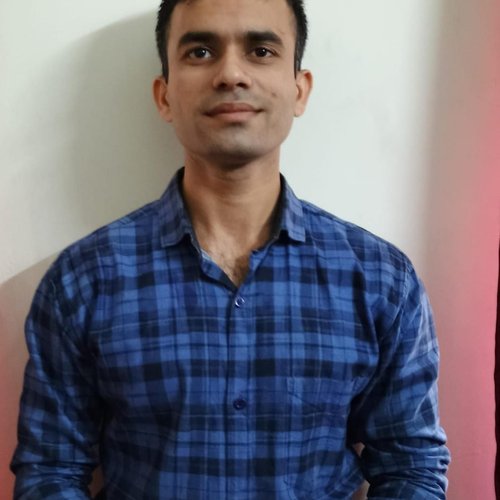
Atul's teaching phrase — 'I can't becomes I understand' — isn't a tagline; it's the actual arc he builds in every session. An Electrical Engineer with nine years of experience across classroom and online platforms, he makes Math and Science feel like tools for solving real problems rather than hoops to jump through.
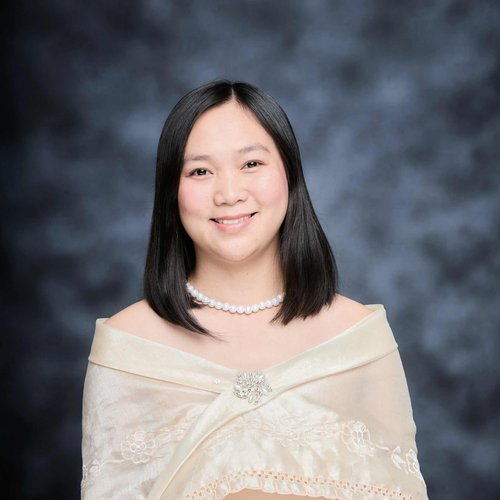
Clarize Maye S. is a licensed professional mathematics teacher who brings intellectual curiosity and creative problem-solving to every lesson. With expertise in algebra, pre-algebra, and trigonometry, she specializes in helping middle and high school students build confidence and genuine passion for math. Her teaching approach transforms how students see themselves as mathematicians.

Devesh is a mathematics educator with years of experience teaching high school students algebra, pre-algebra, calculus, and pre-calculus. He specializes in breaking down complex concepts into simple, relatable explanations and connects mathematical ideas to real-world applications to help students understand why they matter. Devesh is detail-oriented and passionate about building student confidence and genuine interest in mathematics.

Dominador T. is a dedicated educator with a Bachelor's degree in Secondary Education who brings college-level teaching experience to middle and high school math. He specializes in making algebra, pre-algebra, and trigonometry accessible through clear explanations, step-by-step problem solving, and practical examples. Dominador focuses on building student confidence and comfort with complex topics, ensuring every learner feels fully supported.

Gerald is an enthusiastic math tutor with three years of teaching experience, including one year tutoring students online and two years teaching Grade 11 Mathematics in traditional classrooms. He currently works as a college instructor, which has strengthened his ability to adapt to different learning styles and create encouraging learning environments. Gerald's positive outlook and strong commitment to student success make him dedicated to helping middle and high school students master algebra, pre-algebra, and geometry.

Gideon Wakama is a mathematics educator with over four years of experience teaching high school students in both classroom and online environments. He specializes in algebra, pre-calculus, and calculus, and excels at connecting abstract concepts to real-world applications through structured lesson planning and exam preparation. Gideon designs personalized assessments and helps students build problem-solving confidence, whether they're strengthening foundations or preparing for advanced coursework.

Jhon Paulo is a physics-focused mathematician with expertise in theoretical and instrumental physics who brings a unique problem-solving perspective to algebra, pre-calculus, and calculus. With strong coding skills alongside his math background, he helps students build deeper conceptual understanding rather than just memorizing procedures. He specializes in working with high school students in grades 9–12 and is skilled at breaking down complex mathematical concepts into manageable, logical steps.

Lyka Anne has spent six years teaching high school Math, specializing in Calculus, Algebra, and Statistics. She breaks complex problems into clear, manageable steps and creates a collaborative classroom where questions are welcomed and curiosity drives progress. Her approach makes even the toughest topics feel like puzzles worth solving, not procedures to memorize.

Manognya is a dedicated mathematics tutor who specializes in making challenging concepts accessible and engaging for high school students. With expertise in algebra, pre-algebra, and trigonometry, she focuses on building solid foundations while fostering genuine confidence in math. Her personalized approach combines clarity and creativity to help students not just understand the material, but develop a real passion for learning.

Nitish Y. is a results-driven mathematics tutor with 6+ years of experience and over 5,000 hours of teaching middle and high school students. He specializes in making algebra, pre-algebra, and geometry intuitive by connecting concepts to real-life applications, helping students build both confidence and genuine understanding. His approach focuses on developing strong conceptual foundations so students not only perform better on assignments and tests, but develop critical thinking skills they can apply beyond the classroom.

Noorjan is a passionate mathematics educator with over 8 years of teaching experience and 4+ years specializing in online tutoring. She excels at making algebra, pre-algebra, and trigonometry accessible to middle and high school students through clear explanations and patient instruction. Her goal is to build confidence and genuine understanding in every student she works with.

Rick is a Licensed Aeronautical Engineer who brings real-world engineering expertise to middle and high school mathematics. Drawing from his technical background in aircraft services, he specializes in breaking down complex algebra and trigonometry concepts into clear, manageable steps. Rick focuses on building student confidence and academic clarity, helping learners see how mathematics applies to real-world problem-solving.

As an educator and researcher with over six years of experience, I bridge the gap between complex scientific theory and student comprehension. My background in Biotechnology and Bioengineering provides a unique foundation for my teaching; rather than simply delivering facts, I focus on the "why" and the "how." I draw from my own research experiences in clinical oncology and immunology to make classroom concepts feel tangible, urgent, and relevant to the real world.

Sanjaya is a mathematics graduate with extensive experience teaching undergraduate-level math. He specializes in making abstract concepts intuitive by breaking complex problems into manageable steps and using real-world examples and visualizations. Students appreciate his focus on problem-solving skills and conceptual clarity, which helps them build confidence in algebra, pre-calculus, and calculus.

Shakira J. brings 6 years of online teaching experience to middle and high school mathematics. With advanced degrees in Physics and Electronics, she brings deep scientific understanding to algebra, pre-algebra, and pre-calculus concepts. She specializes in breaking down complex topics into clear, manageable steps that help students build confidence and mastery.

Syamala is an electronics engineer and certified CBT professional with decades of tutoring experience. She believes every student has untapped potential and specializes in helping middle and high school students build confidence in algebra, pre-algebra, and geometry. Her approach focuses on identifying each student's unique strengths and providing targeted support to unlock their mathematical abilities.
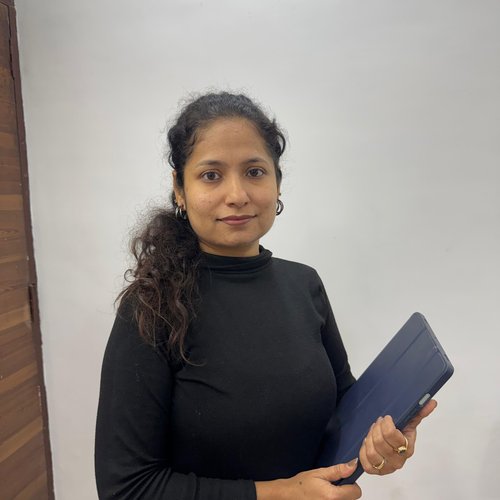
Varsha is an experienced mathematics tutor who specializes in making algebra, pre-algebra, and geometry accessible and enjoyable for high school students. She focuses on strengthening fundamental concepts and building logical thinking skills through a student-friendly teaching approach. Her passion is helping learners develop genuine understanding rather than just memorizing procedures.
Algebra spans five years of Common Core standards, from writing a first variable expression in 6th grade to factoring quadratics in Algebra 2. A student struggling in 9th grade is almost never struggling with 9th-grade material alone. The gap usually started earlier, and knowing exactly where it started is what makes targeted tutoring faster than repeating the whole course.
This is where the curriculum sharpens fastest. Students who sailed through arithmetic hit a wall when the equals sign stops meaning "here comes the answer" and starts meaning "these two sides balance." The most telling failure point is variables-on-both-sides equations. A student who can solve 3x + 5 = 20 by undoing each operation will often write 3x + 5 = x + 13 as 3x − x + 5 = 13, then jump to 2x = 8 without ever moving the 5. The 5 crosses the equals sign without changing sign because the student is following a procedure, not a model. Linear equations, systems of equations, slope and y = mx + b (CCSS 8.EE.B.5–6, 8.EE.C.7–8), and the introduction of functions (CCSS 8.F.A.1–3) all live here. For 8th grade math students, this material also feeds directly into CAASPP Grade 8, STAAR Grade 8 and Algebra 1 EOC, the Florida Algebra 1 EOC, and the NY Regents Algebra 1 exam. Closing the equals-sign model gap takes 4–6 sessions once it is taught explicitly as balance rather than command. Students who also need to solidify literal-equation manipulation — rearranging 2x − 4y = 8 into slope-intercept form, for example — should expect another 2–3 sessions on top of that before both skills are reliable under test conditions.
Algebra doesn't get harder. It gets more precise, and precision punishes gaps. Three specific misconceptions account for the majority of the errors tutors see across grades 6–10. Each one is diagnosable. None of them requires starting over.
Students in grades 6–7 are typically taught that "a variable stands for an unknown number." That definition is functional for simple substitution. It breaks down the moment a variable represents a relationship rather than a single value. Students who hold the "letter" model can evaluate 3x for a given x but cannot write an expression from a verbal description without reversing it. "5 less than a number" becomes 5 − n because that's the order the words appear. A 1981 study by Clement, Lochhead, and Monk documented exactly this error — students translating "there are six times as many students as professors" as 6S = P instead of 6P = S — and it still shows up in algebra sessions today at the same rate.
Abhishek, one of our algebra tutors, works primarily with grade 6 students and builds casual conversation into early sessions intentionally because students who get bored or anxious stop attempting problems entirely. In a recent session, a student who could evaluate expressions without hesitation drew a blank on a write-the-expression prompt. Abhishek had the student narrate the problem in their own words before writing anything — and the correct expression followed immediately. The student didn't have an algebra gap. They had a translation habit.
If your child can evaluate an expression when you give them a value for x but cannot write one from a word problem, this is almost certainly the active gap. The fix is to practice verbal-to-symbolic translation as its own skill, separately from equation solving. Not more problems — different problems.
This is the most common hidden gap in grades 7–8, and it is almost never caught before Algebra 1. Students learn "minus a negative is a plus" as a chant. They apply it correctly when there are exactly two negatives adjacent to each other and nothing else is happening. Add a third term — −4 − (−6) − 3 — and the rule stops working. One student writes −4 + 6 + 3 = 5, absorbing the −3 into the sign rule because the rule says "the negatives cancel." Another writes −4 + 6 − 3 = −1 by accident, which is actually correct, but for the wrong reason, so the next problem goes wrong again.
Jhuzen, one of our 7th grade math tutors, noted in a session review that a student had grasped the basics of algebra including simplifying expressions and solving basic equations, but needed regular practice to keep signed-number operations reliable under pressure. The pattern is consistent: students understand the concept in isolation and lose it inside a multi-step problem. That is not a memory problem. It is a model problem. The intervention is the number line — physically, not abstractly. Students who plot −4 − (−6) on a number line before writing the answer stop making this error within a session or two.
If your child computes isolated signed-number problems correctly but loses track of signs inside a two- or three-step equation, this is the active gap. Rebuilding from the number line typically takes 4–6 sessions before the fluency becomes automatic.
Research in math education has documented for decades that many students enter algebra treating the equals sign as "now write the answer" rather than "these two sides are equal." The practical consequence appears on variables-on-both-sides equations. Students who solve x + 7 = 12 by inspection, without a model, freeze on 3x + 5 = x + 13. Three distinct errors appear at this point. Some students subtract 3x from both sides and end up with 5 = −2x + 13, then panic at the negative coefficient and abandon the problem. Others move the 5 across the equals sign without changing its sign, writing 3x = x + 13 + 5. A third group subtracts correctly on the left but forgets to subtract on the right. All three errors have the same root: no mental model of the equation as a balanced scale.
One parent in our session data noted their child's scores improved after the family began reviewing session notes together between sessions. The improvement came not from additional algebra instruction but from the student developing the habit of asking "does this still balance?" before committing each step to paper.
If your child solves single-operation equations in their head but falls apart when variables appear on both sides, this is the gap to address first. The fix is to work the same problem using a balance scale model before introducing symbolic manipulation — concrete to abstract, not abstract from the start.
All three of these gaps are diagnosable in a single focused session. Once identified, each one typically closes in far fewer sessions than parents expect — not because the student suddenly got smarter, but because a foundational concept that was never made explicit finally gets named, modeled, and practiced in sequence. That is exactly what one-on-one online math tutoring is structured to do.

Our tutors have worked with algebra students at every level — first-timers, students repeating the course, students who got through it but never really understood it. They know how to find where comprehension breaks down and how to rebuild from there.

Most algebra confusion starts in one of three places: fractions, negative numbers, or order of operations. These aren't algebra problems — they're arithmetic gaps that make algebra impossible. The first session finds which one applies and fixes it before anything else.

No rotation. One tutor knows which problem types your child has genuinely mastered and which ones are still iffy. Sessions build on that knowledge instead of re-testing it every time.

We follow your child's actual algebra course — the textbook, the methods, the problem formats. What the tutor practices with your child is as close as possible to what shows up on tests.
Try our online tutoring risk-free!
ZERO cost, NO credit card details required. Cancel anytime
Book your first 1-hour session NOW!
Pre-Algebra is where students first encounter variables and move beyond pure arithmetic. Algebra 1 builds on that foundation with linear equations, inequalities, and systematic problem-solving. Skipping or rushing Pre-Algebra creates gaps that compound quickly — Grade 7 students frequently hit a wall with multiplication and division of larger numbers precisely because that computational fluency was never solidified. The tutor assesses your child in the first session and places them at the point where their foundation is actually solid, not where the grade level assumes they should be.
Watch for avoided homework, frustration that spikes around test time, or grades that don't match how much effort your child puts in. In our sessions, we frequently see students — especially in grades 6–8 — who understand the material conceptually but lose confidence the moment a timed worksheet or classroom setting adds pressure. One parent described their child as speaking well with known people but fumbling in school: that confidence gap is as real an obstacle as a content gap, and it responds directly to consistent one-on-one work.
Yes. Ruvimo tutors are familiar with Common Core standards and district-specific programs used across Bay Area schools, including CPM and College Preparatory Mathematics. Whether your child is in SFUSD, PAUSD, or at a school like Lowell or Mission San Jose, the tutor aligns session content with what's currently being taught in class — so homework, tests, and in-class expectations are all in scope, not a separate track.
After each session, parents receive a written summary covering what was taught, which problems the student worked through, where errors appeared, and what to review or practice before the next session. For Grade 8–10 families especially, this report functions as a home-review guide — our data shows that students whose parents actively engage with these summaries between sessions reach test benchmarks faster than those who don't.
For most students in grades 6–10, yes. The consistent-tutor model matters more than the format: students who work with the same person each session build the kind of trust that reduces the anxiety we frequently see in this age group. In our sessions, students who hesitate to speak up in class often engage much more openly in a one-on-one online setting — which directly affects how quickly they work through algebraic concepts.
Khan Academy delivers content at a fixed pace with no awareness of your child's specific gaps. Ruvimo pairs your child with the same tutor every session — someone who reviews an AI-generated lesson plan before each class, adjusts in real time when a concept isn't landing, and notices when frustration is blocking progress on material the student actually understands. That combination of continuity and live responsiveness is what self-paced platforms can't replicate.
Most parents notice a shift in confidence and homework behavior within the first few sessions. Measurable score improvement — tests, quizzes, in-class performance — typically follows within the first month of consistent sessions. Progress is faster when parents engage with session notes between classes: one student moved from struggling to scoring 70 on a linear equations test after the family began regularly reviewing the materials their tutor assigned.
Yes. Tutors work with students in honors, accelerated, and gifted programs across grades 6–10. For advanced students, the tutor builds on confirmed strengths and introduces upcoming topics with proper scaffolding rather than rushing ahead. Our data shows that when parents review session recordings and notes between classes, accelerated students progress noticeably faster — one student reached a 70 on a linear equations test after the family began consistently reviewing outside sessions.
Both — and the combination is deliberate. Tutors use homework problems as the entry point for identifying gaps, then teach the underlying concept directly. One Grade 8 parent noted that the notes and homework assigned between sessions made a measurable difference in practice performance. After each session, parents receive a progress summary covering what was covered, what gaps remain, and what to review at home.
We swap tutors — no charge, no questions asked. Your child works with the same tutor each session by default, so you'll know quickly whether the fit is working. If it isn't, the replacement process is straightforward and doesn't reset your child's progress — session notes and identified gaps transfer so the new tutor starts informed, not from scratch.
Every tutor goes through AI-assisted screening followed by a manual review of credentials, teaching history, and subject-matter depth before their first session. Tutors are based across India, the Philippines, and Africa, and all hold at least a bachelor's degree in mathematics or a related field. Subject knowledge is verified specifically for the grade range they teach — not just assumed from a degree.
Sessions start at $36 each — well below the $60–$100 per hour typical of local in-person tutors or premium platforms. There are no enrollment fees, no contracts, and no minimum session commitment. Your child's first session is free so you can evaluate the tutor fit and teaching style before spending anything.


